
Southern California PSYCHIATRIST – Volume 74, Number 5 – January

In This Issue:
President’s Column – New Year, New Opportunities by Patrick Kelly, MD
GLP-1 Agonists and Dual GLP-1/GIP Agonists for Serious Mental Illness: A Call for Equitable Access by Galya Rees, MD
Mind the Gap: Reexamining Our Approaches to Disordered Eating by Julia Seiberling, MD
Alternatives to Incarceration Committee Update 2026 – The Closure of Men’s Central Jail: It takes a Village by Drs. Reba Bindra & Emily Wood
December Private Practice Committee Meeting Recap & Telehealth Controlled Substance Prescribing Rule Update by Matt Goldenberg, DO
Advocacy and Activism: a Synthesis on Praxis by Austin Nguy, MD
On Organizational Identity by Emily Wood, MD, PhD
SCPS Career Day – Photo Gallery
SCPS Diversity and Culture Committee
George L. Mallory Diversity, Culture and Social Justice Award Guidelines
November Council Highlights by Roderick Shaner, MD

President’s Column – New Year, New Opportunities
by Patrick Kelly MD
As we turn our calendars to 2026, we face the familiar rituals of a new year: resolutions, predictions, and the promise of a fresh start. Yet I suspect many of us feel a different weight this January. The landscape of American healthcare shifted beneath our feet in the closing weeks of December. The announcement from the Department of Health and Human Services to cut millions in grant funding to the American Academy of Pediatrics—funding dedicated to SIDS prevention, autism detection, and adolescent mental health—was a stark reminder that the ground rules are changing for our profession and our patients across the age spectrum, including a population previously thought universally protected on both sides of the political aisle: children.
For those of us who have dedicated our careers to the mental health of young people, this moment carries particular weight. We have long operated under the assumption that certain commitments transcend politics—that the wellbeing of children, the integrity of preventive care, and the value of early intervention represent shared ground upon which policy disagreements might be set aside. That assumption now requires reexamination. We are entering an era in which established medical science may face headwinds we have not seen in decades, in which the expertise of professional organizations may be dismissed rather than consulted, and in which advocacy for vulnerable populations may be framed as ideological rather than humanitarian.
But therein lies our “new opportunity.”
In times of stability, medical associations such as our own can afford to focus primarily on support and continuity—providing resources, facilitating connections, and maintaining the steady rhythms of professional life. In one sense, this remains true even now. In times of great change and confusion, having a strong, stable influence becomes not less important but more so. However, ensuring stability is not the same as standing still. In fact, it is far from it. When broader governmental forces are the ones shifting the dynamics of our field, it takes tremendous effort and will simply to remain in the same place. A ship at anchor in a storm must work harder than one drifting in calm waters.
In 2026, I believe our goals should remain support and stability, but achieving them will require effort, movement, and forward thinking in ways that more tranquil times do not demand. We face, in a sense, our own dialectic: we seek to provide stability precisely by responding forcefully and dynamically to the forces acting upon us. This only appears to be a paradox – true stability in turbulent conditions is not passive; it is the product of active, continuous adjustment. If federal support for mental health and pediatric care retracts, the resulting vacuum must be filled by strong, vocal leadership at the state and local levels. We must demonstrate—to ourselves, to our patients, and to policymakers—that our commitment to excellent patient care is not contingent on political winds but rooted in clinical excellence, scientific evidence, and professional integrity. These foundations do not shift with election cycles.
Fortunately, we have a unique opportunity to demonstrate this unity close to home. The 2026 APA Annual Meeting will be held in San Francisco from May 16–20. The theme, “Empowering the Psychiatric Workforce,” could not be more timely. In a moment when the profession may feel besieged from without, gathering to affirm our shared purpose and to invest in the next generation of practitioners takes on added significance. The location of the meeting within our own state serves as a reminder that, despite the national noise, our local work remains vibrant and consequential. California has long been a leader in mental health policy; that leadership matters more now than ever.
I was heartened by the enthusiasm on display at our SCPS Career Day on December 13. Seeing the energy of our residents and early-career psychiatrists was a powerful antidote to cynicism. They are entering this field with eyes wide open—aware of the challenges, yet undeterred. They are ready to innovate, to advocate, and to serve. Their presence reminds us that the future of psychiatry is not written in Washington; it is written in training programs, clinics, and communities across this state and this country. Our responsibility is to ensure they inherit a profession worth joining—one that has not retreated from its values under pressure but has clarified and strengthened them.
We cannot control the headlines coming out of D.C., but we can control how we respond. We can control how we show up for each other in San Francisco. We can control how we advocate for our patients in Sacramento. And we can control the culture we build right here in Southern California. These are not small things. In aggregate, they constitute the substance of professional life—the daily decisions, commitments, and relationships that define who we are far more than any federal policy ever could.
2026 is an opportunity to define who we are and what our organization stands for when it matters most. We have the chance to choose—to articulate our values and ideals at precisely the moment when they are most likely to be clarified, which is to say, when they are challenged. Convictions that have never been tested remain abstractions. This year, we will have ample opportunity to discover what we truly believe and how firmly we are willing to hold to it.
I look forward to working alongside all of you in the empowerment of our members and our patients. Thank you, as always, for your continued dedication and support.
Respectfully,
Patrick Kelly, MD
President,
The Southern California Psychiatric Society



GLP-1 Agonists and Dual GLP-1/GIP Agonists for Serious Mental Illness: A Call for Equitable Access
by Galya Rees, MD
The following is a hypothetical patient, based on patients whom I see in my clinic.
GR (the initials of this writer) is a 31-year-old woman who developed schizophrenia in her early twenties. For years she cycled through repeated hospitalizations, almost always after discontinuing antipsychotic treatment because of distressing weight gain. She had failed numerous antipsychotics before achieving some stability on a combination of haloperidol and a second-generation LAI, with which she was somewhat adherent. But stability came at a steep metabolic cost. Over several years, she gained 60 pounds and developed hypertension, hyperlipidemia, and chronic knee pain. Her A1C climbed into the high prediabetes range. Multiple weight-loss medication trials provided minimal benefit. Two years ago, she started a GLP-1 agonist for weight loss. The change was dramatic. She lost 40 pounds and became consistently adherent to her LAI injections. Her schizophrenia symptoms improved, she reconnected with family members and friends, maintained stable housing, and even started working a part-time job. Sadly, this month, due to changes in Medi-Cal coverage, she will lose access to her GLP-1 medication, which she cannot afford out of pocket. The progress that took years to build is at risk of unraveling.
For individuals like G, who live with serious mental illness, second-generation antipsychotic medications are often lifesaving. These medications prevent relapse, reduce suicide risk, and preserve the ability to function in community settings. Yet, as we all know too well, the same medications typically impose a profound metabolic burden. Iatrogenic weight gain, insulin resistance, dyslipidemia, and cardiovascular risk are not side effects at the margins; they are central contributors to the 15-25-year reduction in life expectancy faced by people with serious mental illness (SMI).
Antipsychotic-induced weight gain is one of the most distressing and treatment-limiting adverse effects. It is a major driver of medication nonadherence, relapse, hospitalization, and premature mortality. For many patients, it is not simply a quality-of-life issue; it is an existential barrier to remaining on the very medications that keep them functioning.
Thankfully, we now have effective medications capable of mitigating this risk. A growing body of randomized trials, observational studies, and systematic reviews demonstrates that GLP-1 receptor agonists and dual GLP-1/GIP agonists produce clinically meaningful metabolic improvements in patients taking antipsychotics, including reductions in weight, waist circumference, and insulin resistance, independent of diabetes status.¹–⁴ For the SMI population, already facing extraordinary cardiometabolic vulnerability, these medications can be transformative. They have been for many of my patients.
California’s Medi-Cal formulary changes and their effects across insurance
Prior to 2024, Medi-Cal allowed relatively broad access to GLP-1 and dual GLP-1/GIP agonists. With prior authorization, these medications could be covered for obesity, weight-related metabolic dysfunction, and antipsychotic-associated weight gain, in addition to type 2 diabetes. Many psychiatric patients obtained treatment during this period, often with life-changing improvements. Over the past year, Medi-Cal introduced tighter utilization management, but coverage for some weight-loss formulations remained possible with an approved prior authorization. This allowed patients without diabetes to continue these medications when medically justified.
Although commercial insurers do not necessarily follow Medi-Cal policy, Medi-Cal often acts as a signal in the insurance market. As demand for GLP-1 medications has surged, many insurers have adopted stricter weight-loss criteria, higher BMI thresholds, mandatory lifestyle documentation, and step-therapy requirements.
The 2024–2025 California State Budget included a revision to the Medi-Cal drug formulary that restricts coverage of GLP-1 and dual GLP-1/GIP agonists. Beginning January 1, 2026, Medi-Cal will no longer cover any GLP-1 or dual GLP-1/GIP agonist for weight loss, regardless of medical necessity or prior authorization. All weight-loss indications will be excluded from the pharmacy benefit. Coverage will remain only for FDA-approved, non-weight-loss indications, such as type 2 diabetes; cardiovascular risk reduction in adults with obesity and established CVD; and moderate–severe obstructive sleep apnea in adults with obesity.
This restriction disproportionately affects people with SMI, one of the most medically vulnerable and historically underserved populations in our health system. Forced discontinuation is not benign. Patients who lose access often experience rebound weight gain and worsening metabolic parameters. For individuals struggling to remain on antipsychotic therapy, the loss of GLP-1 treatment will likely have cascading effects leading to worsening of psychiatric symptoms.
Where SCPS stands
SCPS Council recently approved a resolution that supports continued Medi-Cal coverage of GLP-1 and dual GLP-1/GIP agonists for psychiatric patients without diabetes, recognizing their emerging role in mitigating the metabolic consequences of essential psychiatric medications. This is a matter of equity, evidence-based care, and public health.
Our patients with serious mental illness deserve access to life-preserving treatments that directly enable them to remain on the medications they need for functioning and survival.
Possible pathways to consider
It is notable that GLP-1 agonists recently received expanded FDA indications for conditions such as obesity and obesity-associated comorbidities, including obstructive sleep apnea. FDA approval for sleep apnea was based not on diabetes status, but on the recognition that obesity is itself a treatable medical condition with downstream health consequences. This regulatory step is already improving coverage across payers, including Medi-Cal.
If the FDA were to recognize second-generation antipsychotic–induced metabolic syndrome or medication-associated obesity as legitimate indications, or if manufacturers were to conduct the necessary trials, coverage barriers could shift. Science is pointing in this direction; what is missing is the regulatory framework that formally acknowledges the unique metabolic risks imposed by antipsychotic treatment. Clinical trials should further evaluate GLP-1–based therapies for cardiovascular risk in SMI populations, antipsychotic-associated weight gain, and antipsychotic-induced metabolic syndrome.
While awaiting FDA action, Medi-Cal should create a utilization management pathway that recognizes SMI as a high-risk, high-need population, restore coverage for GLP-1 agonists when used to prevent or treat antipsychotic-associated metabolic complications, and, at minimum, allow continuation of therapy for patients already stabilized.
Organizations like SCPS, CSAP, and APA must continue to build awareness that iatrogenic metabolic care is psychiatric care. Reducing antipsychotic-induced metabolic disease is central to addressing health disparities and improving long-term outcomes in SMI patients. We should consider partnering with CMA, cardiology, endocrinology, and obesity-medicine stakeholders to present a united front.
SCPS Resolution: Support for Continued Medi-Cal Coverage of GLP-1 and Dual GLP-1/GIP Agonists for Psychiatric Patients Without Diabetes
Approved by Council on November 13, 2025
Whereas, GLP-1 receptor agonists (e.g., semaglutide) and dual GLP-1/GIP agonists (e.g., tirzepatide) have demonstrated substantial benefits for weight management, metabolic regulation, and reduction of cardiovascular risk in individuals with obesity, metabolic syndrome, and medication-associated weight gain, including those treated with antipsychotic medications; and
Whereas, individuals with schizophrenia and related psychotic disorders experience a markedly increased risk of obesity, metabolic syndrome, diabetes, and premature cardiovascular mortality — conditions that contribute to a 15- to 25-year reduction in life expectancy compared to the general population; and
Whereas, antipsychotic-induced weight gain is one of the most common and distressing side effects of psychiatric treatment, contributing to nonadherence, relapse, and worsened clinical outcomes; and
Whereas, emerging evidence supports the efficacy of GLP-1 and dual GLP-1/GIP agonists in mitigating antipsychotic-associated metabolic dysfunction, independent of diabetes status, thereby improving both physical and mental health outcomes; and
Whereas, the 2024–2025 California State Budget included a revision to the Medi-Cal drug formulary that restricts coverage of GLP-1 and dual GLP-1/GIP agonists to individuals with a diagnosis of type 2 diabetes, eliminating access for those prescribed these medications for obesity or medication-associated metabolic complications; and
Whereas, this restriction disproportionately harms Medi-Cal beneficiaries with serious mental illness, who already face major health inequities and limited access to effective obesity and metabolic care; and
Whereas, abrupt discontinuation or forced tapering off GLP-1 therapies in stabilized patients may lead to rebound weight gain, metabolic deterioration, and worsening psychiatric outcomes;
Therefore be it resolved, that the Southern California Psychiatric Society (SCPS) urges the California Department of Health Care Services (DHCS) and Medi-Cal to restore and maintain formulary coverage for GLP-1 and dual GLP-1/GIP agonists for all eligible patients, including those without diabetes, when clinically appropriate and prescribed for the management of antipsychotic-associated weight gain, obesity, or metabolic dysfunction; and
Be it further resolved, that SCPS communicate this position to the California State Association of Psychiatrists and relevant state policymakers to advocate for equitable access to these evidence-based metabolic treatments for individuals with serious mental illness; and
Be it further resolved, that SCPS support educational and advocacy initiatives highlighting the medical necessity and psychiatric relevance of GLP-1–based therapies in improving long-term health outcomes for Medi-Cal beneficiaries with mental illness.
References:
- Larsen JR, Vedtofte L, Jakobsen MS, et al.
Effect of liraglutide treatment on prediabetes and overweight or obesity in clozapine- or olanzapine-treated patients with schizophrenia spectrum disorder: A randomized clinical trial.
JAMA Psychiatry. 2017;74(7):719-728. doi:10.1001/jamapsychiatry.2017.1220 - Svensson CK, Larsen JR, Vedtofte L, et al.
Metabolic effects of long-term liraglutide treatment in patients with schizophrenia spectrum disorders treated with clozapine or olanzapine.
Acta Psychiatr Scand. 2019;139(1):26-36. doi:10.1111/acps.12967 - Siskind D, Russell AW, Gamble C, et al.
Semaglutide for clozapine-associated obesity (COaST trial): A randomized, placebo-controlled clinical trial.
Lancet Psychiatry. 2025; in press. - Bak M, Fransen A, Jan D, et al.
GLP-1 receptor agonists for antipsychotic-associated weight gain and metabolic dysfunction: A systematic review and meta-analysis.
Acta Psychiatr Scand. 2024;150(2):98-112.
Disclaimer: The case report presented here is based on a hypothetical patient.


Mind the Gap: Reexamining Our Approaches to Disordered Eating
by Julia Seiberling, MD
If you were scrolling through social media in the 2010s, you likely came across the term body positivity. While the origins of this movement are found in the activist efforts of the Fat Acceptance Movement in the 1960s, its emergence online began in 2011 before nestling in the mainstream social media, fashion, and entertainment landscape around 2014. [i] Unfortunately, like many of the social progressive gains seen in the 2010s, we are living through a cultural backlash with the pendulum swinging backward. In no small part aided by the advent of GLP-1 medications, the fashion, beauty, and entertainment landscapes now showcase a resurgence of the beauty standards that dominated the 90s and early aughts.[ii] Once again, the thin body ideal reigns supreme while eating disorder prevalence is on the rise. [iii]
Many of our social attitudes and beliefs around weight loss and body size come from a pervasive Diet Culture that teaches us to equate thinness with health and one’s inherent value. These attitudes are entrenched by a $35 billion weight loss industry that is expected to double in market size by 2032.[iv] To address the fears and insecurities exploited by Diet Culture many people turn to a cycle of disordered eating wherein they start to restrict or compulsively monitor their food intake and develop compensatory purging behaviors.[v] The most severe of these cases develop clinically distinct eating disorders, but many others enter an often-lifelong cycle of restricting, feeling deprived, breaking the diet, then navigating shame, guilt, and body dissatisfaction until returning to dieting behavior. This pattern is associated with its own set of serious health consequences, including long term weight gain.[vi] Nonetheless, patients get caught in a Sisyphean quest to shrink their bodies regardless of the cost to their overall health. Between this pattern of behavior and the many influences that encourage it, it is no surprise that global eating disorder prevalence doubled from 2010 to 2018, [vii] or that a 2023 study found that 22% of children and adolescents show signs of disordered eating.[viii]
These trends ensure that those of us in psychiatry will encounter an increase in patients struggling with disordered eating and body dissatisfaction. Identifying and aiding patients with these conditions can be challenging, especially because they are less likely to be help seeking.[ix] This difficulty calls upon us to do the vital detective work necessary to identify them. These conditions are among the most lethal psychiatric disorders; one person dies every 52 minutes as a direct consequence of one.[x] Many are reluctant to seek help for their disordered eating, but the majority experience significant psychiatric comorbidities which can provide an entry point into the mental healthcare infrastructure.[xi] Unfortunately, epidemiological data shows that many special populations are under diagnosed and under treated. As the number of patients struggling with these conditions rise, we need to close these gaps in diagnosis and care.
Before anything else, a clinician’s own implicit biases about what eating disorders look like and what types of people have them can obscure recognizing a patient in need of assistance. Often, when people think about eating disorders, the archetype that comes to mind is that of a young white female. In reality, eating disorders exist across every cross section of society. A 2019 study found that Hispanic, Black, and Asian Americans are more likely to engage in disordered eating behaviors than their white counterparts.[xii] Unfortunately, patients of color are half as likely to be diagnosed or receive treatment for their eating disorders.[xiii] The myth of the thin white female archetype also has serious consequences for male patients. While rates of eating disorders have increased in males faster than females,[xiv] there is often a significant delay in recognizing these disorders in male patients.[xv] A similar pattern is found in LGBT patients, who are more likely to develop eating disorders than their heterosexual, cisgender peers.[xvi] This is concerning because nearly 90% of LGBT youth report being dissatisfied with their body, and those patients who have been diagnosed with eating disorders have nearly four times greater odds of attempting suicide.[xvii]
Perhaps the patients most likely to be overlooked when it comes to consideration of eating disorders are those in larger bodies. Although weight stigma is a societal issue, patients face many of its consequences in clinical settings. Studies show healthcare providers spend less time with patients in larger bodies, offer them less health information, and view them as lazy, difficult, and noncompliant.[xviii] Such attitudes are keenly felt by patients and lead to a further erosion of trust in clinicians. Patients then delay care and experience worsening psychological and physical health outcomes.[xix] Though people in higher weight bodies are 2.45 times as likely to demonstrate disordered eating behaviors, they are half as likely to be diagnosed with one.[xx] This is concerning because rates of eating disorders are increasing the most in this population and the condition’s danger lingers despite body size.[xxi] This danger requires all healthcare workers to look past ingrained assumptions to find a better way to show up for all of our patients.
So how do we make better happen? First, by reevaluating how we navigate conversations with patients about their eating behaviors and body size. To borrow from the Health at Every Size (HAES) framework, we should encourage shifting our focus away from the number on the scale and towards health promoting behaviors that can benefit people of all sizes. The guiding principles of HAES amplify weight inclusivity and health affirming practices that build a more respectful and supportive relationship between a patient and their healthcare team. It encourages patients to eat for well-being rather than explicitly for weight management and promotes enjoyable physical activity accessible to all bodies and abilities. [xxii]
This change starts with recognizing that clinicians are human too. We all have insecurities and aspirations that color how we think about what a body “should” look like. What matters is leaving those preconceived notions outside of the exam room. Small changes like exercising caution before offering automatic praise or reinforcement of weight loss can make room to work with patients to better understand what fluctuations in their weight mean to them. We can also encourage values-oriented therapy to help patients separate their sense of self-esteem from their body esteem. Part of this process could introduce patients to the idea of body neutrality. This principle encourages mindful observation of how the body changes, emphasizes the importance of respect and care for one’s body, and expands one’s sense of self-worth to prioritize intrinsic qualities and extrinsic passions.[xxiii] This neutral, respectful acceptance of one’s body can often feel like a more realistic goal than body positivity for patients who are still preoccupied with a specific beauty standard.
With the prevalence of eating disorders and body dissatisfaction on the rise, we owe it to our patients to remain vigilant for warning signs that someone may be struggling. Perhaps if we reflect honestly with ourselves about the ways we can address our own biases, we can create the inclusive and supportive care that will allow patients the ability to find their own paths toward recovery.
____________________________________________________
[i] Tonic G. A look back at a decade of body positivity. VICE. July 27, 2024. Accessed November 29, 2025. https://www.vice.com/en/article/body-positivity-2010-2019-movement/
[ii] Edwards C. Is super skinny back? UK sees rise in complaints over thin models. BBC News. August 8, 2025. Accessed November 29, 2025. https://www.bbc.com/news/articles/c4gm9rygdymo
[iii] McVay E. Eating disorders among kids are on the rise | johns hopkins medicine. Johns Hopkins Medicine. December 9, 2024. Accessed November 30, 2025. https://www.hopkinsmedicine.org/news/articles/2024/12/eating-disorders-among-kids-are-on-the-rise
[iv] Weight management market size to surpass USD 59.8 billion by 2032: Growing at 7.8% cagr. BioSpace. October 17, 2025. Accessed December 5, 2025. https://www.biospace.com/press-releases/weight-management-market-size-to-surpass-usd-59-8-billion-by-2032-growing-at-7-8-cagr
[v] Dennis AB. Disordered eating vs. eating disorders. National Eating Disorders Association. November 7, 2025. Accessed December 29, 2025. https://www.nationaleatingdisorders.org/what-is-the-difference-between-disordered-eating-and-eating-disorders/
[vi] Perry MF. Weight & Eating Behaviors: A Non-Stigmatizing Approach. Webinar presented at National Center of Excellence for Eating Disorders: February 2023. https://nceedus.org/wp-content/uploads/2023/11/NCEED_Weight_Stigma-webinar-presentation-slides_Feb_2023.pdf
[vii] Galmiche, M., Déchelotte, P., Lambert, G., & Tavolacci, M. P. (2019). Prevalence of eating disorders over the 2000-2018 period: a systematic literature review. The American journal of clinical nutrition, 109(5), 1402–1413. https://doi.org/10.1093/ajcn/nqy342
[viii] López-Gil, J. F., García-Hermoso, A., Smith, L., Firth, J., Trott, M., Mesas, A. E., Jiménez-López, E., Gutiérrez-Espinoza, H., Tárraga-López, P. J., & Victoria-Montesinos, D. (2023). Global Proportion of Disordered Eating in Children and Adolescents. JAMA Pediatrics. https://doi.org/10.1001/jamapediatrics.2022.5848
[ix] Coffino, Jaime A. et al. (2019).Rates of Help-Seeking in US Adults With Lifetime DSM-5 Eating Disorders: Prevalence Across Diagnoses and Differences by Sex and Ethnicity/Race. Mayo Clinic Proceedings, Volume 94, Issue 8, 1415 – 1426 https://www.mayoclinicproceedings.org/article/S0025-6196(19)30352-0/fulltext
[x] Deloitte Access Economics. The Social and Economic Cost of Eating Disorders in the United States of America: A Report for the Strategic Training Initiative for the Prevention of Eating Disorders and the Academy for Eating Disorders. June 2020. Available at: https://www.hsph.harvard.edu/striped/report-economic-costs-of-eating-disorders/.
[xi]Hambleton, A., Pepin, G., Le, A. et al. Psychiatric and medical comorbidities of eating disorders: findings from a rapid review of the literature. J Eat Disord 10, 132 (2022). https://link.springer.com/article/10.1186/s40337-022-00654-2
[xii] Simone, M., Telke, S., Anderson, L. M., Eisenberg, M., & Neumark-Sztainer, D. (2022). Ethnic/racial and gender differences in disordered eating behavior prevalence trajectories among women and men from adolescence into adulthood. Social science & medicine (1982), 294, 114720. https://doi.org/10.1016/j.socscimed.2022.114720
[xiii] Sonneville, KR, Lipson, SK. (2018). Disparities in eating disorder diagnosis and treatment according to weight status, race/ethnicity, socioeconomic background, and sex among college students. Int J Eat Disord, 51, 518– 526. https://doi.org/10.1002/eat.22846
[xiv] Gorrell, S.,& Murray, S. B. (2019). Eating disorders in males. Child and Adolescent Psychiatric Clinics of North America, 28(4), 641–651. https://doi.org/10.1016/j.chc.2019.05.012
[xv] Räisänen, U.,& Hunt, K. (2014). The role of gendered constructions of eating disorders in delayed help-seeking in men: A qualitative interview study. BMJ Open, 4(4). https://doi.org/10.1136/bmjopen-2013-004342
[xvi] Parker, L. L., & Harriger, J. A. (2020). Eating disorders and disordered eating behaviors in the LGBT population: a review of the literature. Journal of eating disorders, 8, 51. https://doi.org/10.1186/s40337-020-00327-y
[xvii] The Trevor Project. (2022). Research Brief: Eating Disorders among LGBTQ Youth. https://www.thetrevorproject.org/research-briefs/eating-disorders-among-lgbtq-youth-feb-2022/
[xviii] Alberga, A. S., Edache, I. Y., Forhan, M., & Russell-Mayhew, S. (2019). Weight bias and health care utilization: a scoping review. Primary health care research & development, 20, e116. https://doi.org/10.1017/S1463423619000227
[xix] see footnote #1
[xx] Ramaswamy, N., & Ramaswamy, N. (2023). Overreliance on BMI and Delayed Care for Patients With Higher BMI and Disordered Eating. AMA Journal of Ethics, 25(7), E540-544. https://doi.org/10.1001/amajethics.2023.540
[xxi] People with higher weight. NEDC. Accessed December 29, 2025. https://nedc.com.au/eating-disorders/eating-disorders-explained/eating-disorders-and-people-with-higher-weight. https://nedc.com.au/eating-disorders/eating-disorders-explained/eating-disorders-and-people-with-higher-weight
[xxii] Graves L, Dennis K. Size diversity and eating disorders: Embracing HAES. National Eating Disorders Association. September 15, 2025. Accessed December 29, 2025. https://www.nationaleatingdisorders.org/size-diversity-and-eating-disorders/
[xxiii] Pellizzer ML, Wade TD. Developing a definition of body neutrality and strategies for an intervention. Body Image. 2023;46:434-442. doi:10.1016/j.bodyim.2023.07.006 https://doi.org/10.1016/j.bodyim.2023.07.006


Alternatives to Incarceration Committee Update – 2026
by Drs. Reba Bindra & Emily Wood
The Closure of Men’s Central Jail: It Takes a Village
A handy reference guide
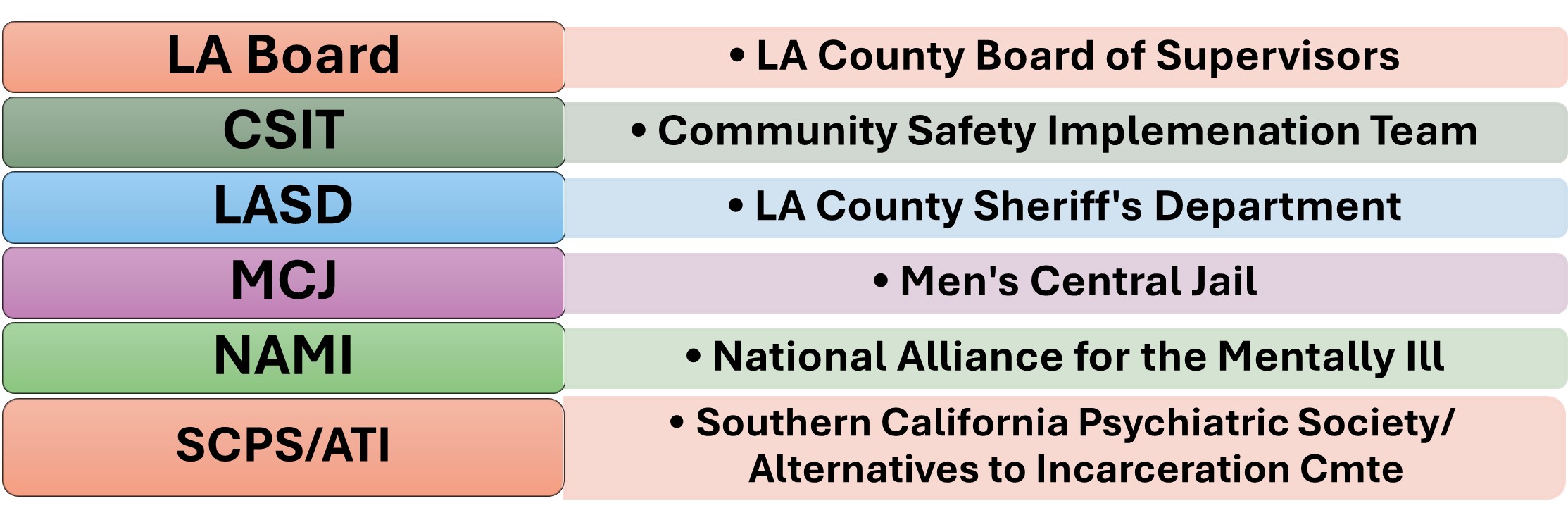
The SCPS Alternatives to Incarceration committee is dedicated to advocating for investment in community-based alternatives to incarceration such as mental health treatment, housing, healthcare, and substance use treatment programs. The LA County jail system is the largest county carceral system in the country. In the first quarter of 2025, the jail had an average daily inmate population of 12,738 and it is estimated that almost 50% of inmates have a mental health related need. There is also a suggestion that up to 61% of the mental health population could potentially be diverted to community-based care. It has become the largest defacto mental health facility in the US.
The Men’s Central Jail (MCJ) is one piece of the jail system. A quick internet search about it will be enough to lose your appetite…for days. Degrading and hazardous conditions, violence, and in-custody deaths. It opened in 1963 and designed for approximately 3400 inmates but it has been at max capacity or over capacity for many years. The deplorable conditions at MCJ have been an open secret for many years before the county formally acknowledged it. After years of pressure from advocates and the community, it was formalized.
2019: LA Board of Supervisors voted to cancel an MCJ replacement contract ($1.7 Billion) and shifted resources to the “care first, jail last” initiative.
2020: The Board unanimously voted to close MCJ. The Jail Closure Implementation Team (JCIT) was formed to address this decree.
2022: JCIT was directed to work with the sheriff’s department (LASD) and other entities to develop proposals.
2024: JCIT was rebranded as CSIT
2026: Here we are, nothing has really changed. It is estimated that it will take years and tremendous resources to implement this plan.
The National Alliance for the Mentally Ill (NAMI) is the largest grassroots mental health organizations in the country. It s driven by family members of those who have suffered from a mental illness or substance use disorder (SUD), patients themselves, advocates, healthcare professionals and many others. They have been involved in the MCJ closure project for a few years now, even working directly with LASD top officials. The ATI has now partnered with NAMI on this project so that important resources come together to be part of this solution.
It is an amazingly complex and delicate project to close a jail and what has been outlined above is only a fraction of the entities involved with this. The reality has set in that this will not a be a fast or efficient process. Unfortunately for the inmates and patients that are currently housed at MCJ, they will continue to endure the awful and inhumane conditions that have been extensively documented. As long as MCJ stays open, we have failed as a society. We face the ultimate challenge for finding alternatives to incarceration.
References
https://www.laalmanac.com/crime/cr25b.php
Holliday S, Pace N, Gowensmith N, et al. Estimating the Size of the Los Angeles County Jail Mental Health Population Appropriate for Release into Community Services. RAND Corporation; 2020. doi:10.7249/RR4328
The Judges and Psychiatrists Leadership Initiative
We continue to find our involvement with the Judges and Psychiatrists Leadership Initiative (JPLI) both professionally enriching and personally rewarding. JPLI brings together psychiatrists and judges from around the country to address the overrepresentation of individuals with mental illness in the criminal justice system. Psychiatrists partner with interested judges to train groups of judges in mental health, competency issues, and diversion opportunities. Through these trainings, we have discovered meaningful ways to contribute our expertise to a field where the intersection of mental health and the legal system has profound implications for individuals and communities.
In addition to training judges at conferences and judicial education programs around the state in 2025, we also presented at the American Psychiatric Association’s annual meeting alongside two California Superior Court judges — Judge Amy Guerra and Judge Karla Kerlin. While the law and judges can be quite intimidating, it turns out that judges are people, too. They take their responsibilities with profound seriousness and wrestle with genuine concerns about whether they are making the right decisions — both in their interpretation of the law and public safety, including the outcomes for individuals with serious mental illness. They demonstrate genuine eagerness to understand even fundamental mental health concepts, absorbing this knowledge with enthusiasm that reflects their commitment to more informed, compassionate decision-making. In many ways, we as mental health professionals have an advantage to offer: our knowledge is grounded in science and the understanding of human behavior, while legal frameworks are entirely socially constructed. These collaborative experiences have reinforced my belief in the vital importance of ongoing dialogue between our professions.
December Private Practice Committee Meeting Recap & Telehealth Controlled Substance Prescribing Rule Update
by Matt Goldenberg, DO – SCPS Assembly Representative and Chair, SCPS Private Practice Committee
On Tuesday, December 2, 2025, the SCPS Private Practice Committee held a Zoom Presentation with Important Updates from the California Medical Association (CMA) on two topics impacting Private Practice Psychiatrists. We discussed:
1) What Private Practice Psychiatrists Need to Know about The Data Exchange Rules for 2026
2) A 2026 Update on State and Federal Tele-Prescribing Rules
SCPS thanks the CMA staffers, Jeff Nguyen, Senior Director of Physician Services and Rachel Proud, MPH Associate Director, Practice Transformation for their comprehensive and informative presentations.
The event and educational training were a free benefit for all SCPS members and especially focused for those in part- or full-time private practice. If you are interested in attending a future Private Practice Committee event and/or getting onto the SCPS Private Practice Committee mailing list, please reach out to Mindi!
If there are topics that you would like to see featured at our next meeting, please let me or Mindi know!
Major takeaways from the December meeting were:
- Sign the state’s Data Sharing Agreement by January 31, 2026, if you’re a physician practice with <25 providers or an acute psychiatric hospital. You can do so here: https://dxf.chhs.ca.gov/how-to-join/
- Fourth Temporary Extension of COVID-19 Telemedicine Flexibilities for Prescription of Controlled Medications (link)
- The Fourth Temporary Extension does not change the core prescribing flexibilities established in the previous extensions; instead, it maintains the status quo through December 31, 2026.
- Primary Differences from the 3rd Extension
- Expiration Date: The deadline for remote prescribing without a prior in-person visit has been moved from December 31, 2025, to December 31, 2026.
- Interaction with “Two Final Rules”: Unlike the 3rd extension, this fourth rule operates alongside two new permanent regulations that became effective on December 31, 2025:
- Expansion of Buprenorphine Treatment via Telemedicine Encounter: Establishes permanent pathways for opioid use disorder treatment.
- Continuity of Care via Telemedicine for Veterans Affairs Patients: Provides specific authorities for VA-affiliated practitioners.

Advocacy and Activism: a Synthesis on Praxis
by Austin Nguy, MD
Last month, Dr. Goldenberg critically discussed a recent APA messaging by our president “Advocacy not activism.” He eloquently explained that such a messaging is oftentimes counterintuitive of the changes we want to see in organized psychiatry. He reviewed the difference between advocacy and activism and called upon psychiatrists to be the thought leaders of our mental health care system. Advocacy is a means in which people work within the internal structures to sort problems. However, activism often comes through an external lens where we initiate conversations about structural change.
I want to continue that conversation here. As a current psychiatry resident, I often feel quite overwhelmed and powerless when I am advocating for my patients. Working for the various healthcare systems and seeing day in and day out, the cycle of problems that really are upstream– housing insecurity, lack of education and literacy, occupational resources, and crippling drug addictions. I am learning medio-legal jargon and the various systemic and structural intricacies of our broken health care delivery. However residency training teaches you about how to operate the systems but we do not talk about how to change the system for the better.
I turn to organized psychiatry as a vehicle to see change– something I view as activism. Activism feels to me more like making the concrete and practical changes that bridge those gaps. Advocating in this context feels like giving up to the status quo and shuffling resources around when there are care gaps.
I am inspired by the words of Paolo Freire who authored the book “Pedagogy of the Oppressed.” Paolo Freire wrote this book when he was exiled to Chile following a US backed military coup in Brazil. The title of the book “pedagogy of the oppressed” rather than “pedagogy for the oppressed” represents the power dynamic shift and perspective change that initiates this conversation.
Inspired by the works of Fanon and Marx, Freire was a direct response to deep-seated inequities of Brazilian society. He was critical in examining the essence of Capitalist society that is extractive and often leaves the oppressed paying the consequences. He questioned the direct process in which the oppressed continue to be oppressed. He takes a look through pedagogy and gives us a framework on how to work with the common ordinary people. This book looks at the ways in which pedagogy or education can be a vehicle for indoctrination and to continue to perpetuate and reify the structural inequities and injustices of our society.
He does this by calling modern day educational systems through a ¨banking¨ system. The common presentation of problem based learning (teaching through a specific trajectory) and strict definitions based methods are examples. A teacher is designed to “bank” or replicate a strict “right” way of thinking impressed upon the student. Freire also uses the word “prescriptive” to describe this teaching doctrine.
I see parallels with this in medical school and residency training. As much as we want to become change agents, we often need to survive based upon the “hidden curriculum” so many times I have medical resident colleagues conform to adopt the rigorous and antiquated practices that are often “eminence based medicine.” This process of becoming a doctor is full of change but can almost strip yourself of your initial goals and aspirations and often this process does not recognize residents and medical students as players to change the system. In this way, this professional development is dehumanizing.
However Friere, offers this, to resolve. Talk with people, meet them where they are at. Truly understands the community based problems are all linked and connected. The struggle of individual success in modern day capitalism is linked to the suffering of others.
When it comes to advocacy and activism– we need both of these players. Our psychiatrists on the field are experts on advocacy for our patients. We know the local terrain and the care gaps intimately to avoid hardships and pain for the transitions points for our patients. However, I believe organized psychiatry should continue to activate our psychiatrists and to hold the APA to its “activist” role.
In the final chapter of Pedagogy of the Oppressed, Freire delineates the difference between genuine activism and hollow advocacy. By defining “verbalism” and “activism,” he provides a framework for understanding why some efforts to change systems fail, while others risk creating new problems.
Freire first introduces these terms in Chapter 2, but it’s in Chapter 4 where he fully explores their dangers. For me, verbalism names a common pitfall in advocacy work. It’s the act of speaking about injustice in a way that is disconnected from reality or action. As Freire puts it, this is when “words are emptied of their concreteness and become a hollow, alienated verbosity.” It signals virtue or concern on paper, but without the substance or action needed to actually challenge power. Freire quite bluntly, calling it an alienating “blah.” I personally see this creating a kind of dehumanizing cycle. For those in power it is performative and for the oppressed it becomes an alluring promise with no guarantees for change.
On the other side, Freire is equally critical of activism, particularly when activism is not self-reflective. He describes this as “blind” action. It’s consequential, it creates movement, but because it lacks critical thought, it can accidentally replicate the very structures of oppression it seeks to dismantle. True change, Freire argues, cannot come from “activism for activism’s sake,” which “negates true praxis and makes dialogue impossible.”
Freire calls upon “praxis” as the solution and bridge. He defines praxis succinctly as “reflection and action upon the world in order to transform it.” He fuses both verbalism and activism. His formula clarifies it: “reflection without action is verbalism; action without reflection is activism.” Praxis is what unites thoughtfulness with decisive action, turning both advocacy and activism into tools for actual liberation. It becomes the essential method for ensuring our work is both critical and effective.
He shows that verbalism and activism, when disconnected, are two sides of the same ineffective coin. One is all talk, the other all motion, and both can uphold oppression in different ways. The real power lies in praxis—the constant, dynamic cycle of reflecting on our world and then acting to change it.
Freire shows us a practical guide. It argues that for advocacy to be more than performance and for activism to be more than reaction, they must be rooted in this unified, thoughtful practice. For anyone committed to real change, praxis is the non-negotiable core of the work.
Citations:
Freire, Paulo. Pedagogy of the Oppressed. Penguin Classics, 2017.
On Organizational Identity
by Emily Wood, MD, PhD
I’ve been thinking a lot lately about loyalty – where we place it, what we owe to institutions versus individuals, and how we navigate the tension between belonging and principle. These aren’t just abstract philosophical questions. They’re showing up in our field right now in ways that feel urgent and personal.
As psychiatrists, we spend our careers helping patients navigate conflicts between competing loyalties. A patient struggles between loyalty to family and their own wellbeing. Another wrestles with allegiance to a workplace culture that conflicts with their values. The literature on moral injury – originally developed in military contexts but increasingly applied to healthcare – describes the psychological distress that occurs when individuals are prevented from acting according to their ethical values due to institutional constraints. We recognize these as legitimate psychological dilemmas, not simple moral failings. Yet when it comes to our own professional organizations, we often avoid applying the same lens.
I’ll be direct: I’m struggling with my relationship to organized psychiatry right now. Specifically, I’m troubled by what appears to be a choice by the American Psychiatric Association to prioritize organizational preservation over more forceful advocacy in a moment of crisis for public health and mental health infrastructure. The explanation I’ve heard – that leadership has a “fiduciary responsibility” to protect the organization – strikes me as exactly backward. Organizations exist to serve their members and their missions, not the other way around.
The most recent official document regarding the values and mission of the APA was passed by the APA Board of Trustees in 2001. It states, “The American Psychiatric Association is an organization of psychiatrists working together to ensure humane care and effective treatment for all persons with mental disorders… It is the voice and conscience of modern psychiatry.”
This tension has roots in well-established organizational sociology. DiMaggio and Powell’s seminal work on institutional isomorphism documented how organizations, once established, develop their own interests that can diverge from the interests of their members.1 Organizations begin to mimic other established institutions in their field, prioritizing legitimacy and resource acquisition over their founding missions. Bureaucracies naturally tend toward self-preservation, and leadership begins to confuse the health of the organization with the values that originally animated it.
We recognize analogous dynamics in family systems theory. The family that prioritizes “keeping up appearances” over addressing dysfunction. The group that values harmony so highly that dissent becomes pathologized. We help patients see these patterns and find their own voices within or outside these systems.
The challenge is applying this lens to ourselves and our institutions.
The DSM-5, for instance, is an enormously valuable tool – a shared language that allows clinicians and researchers to communicate clearly about diagnostic concepts. But it’s a clinical guideline, not an end in itself. When financial considerations around the DSM – or any revenue stream – begin to shape our organization’s willingness to take stands on critical matters of public mental health, we’re seeing what organizational researchers call “goal displacement,” where means become ends.
I’ve watched concerns about organizational competition prevent collaboration with aligned groups. This reflects in-group bias – the tendency to favor one’s own group even when cooperation would better serve shared goals. When organizational territory matters more than shared mission, we’ve lost sight of actual purpose.
I recognize this isn’t simple. Organizations do need resources to function. Leadership must balance competing concerns. There are no easy answers about how to navigate these tensions perfectly.
But I do know this: organizations are composed of people. They have no reality separate from the people who make them up and the missions those people created them to serve. When we start talking about organizations as if they’re entities with their own needs for protection and preservation, we’re reifying what should remain a tool for collective action.
Many of us participate in organized psychiatry because we want to be part of something larger than ourselves – to have a community of people working toward shared goals. That desire for belonging is deeply human. The need to belong – to form and maintain strong, stable interpersonal relationships – is a fundamental human motivation.2 But healthy organizational belonging, like healthy attachment, should support rather than constrain our capacity to act on our values.
In my local organization of SCPS, I have found supportive colleagues who are interested in discussing what the “voice and conscience of modern psychiatry” should sound like right now. SCPS leaders are dedicated to “working together to ensure humane care and effective treatment for all persons with mental disorders.” Please know that you can reach out for support.
References:
- DiMaggio PJ, Powell WW. The iron cage revisited: Institutional isomorphism and collective rationality in organizational fields. American Sociological Review. 1983;48(2):147-160. https://doi.org/10.2307/2095101
- Baumeister RF, Leary MR. The need to belong: Desire for interpersonal attachments as a fundamental human motivation. Psychological Bulletin. 1995;117(3):497-529. https://doi.org/10.1037/0033-2909.117.3.497
SCPS Career Day
December 13, 2025
Our annual Career Day was held last month at Kaiser Permanente in West Los Angeles. We would like to thank our all of speakers, exhibitors and attendees for making this event happen. Special thanks to Galya Rees, MD, as well as our RFM Reps – Christopher Chamanadjian, MD, and Alexis Smith, MD + our DMUR Reps – Miles Reyes, MD and Austin Nguy, MD.
Big thanks to our exhibitors: Adelpha Psychiatry Group, California Department of State Hospitals, ExMed, Inc., Kaiser Permanente – Southern California Permanente Medical Group, L.A. County Department of Mental Health, Mindpath Health, PRMS – Professional Risk Management Service, ROADS Community Clinics, Traditions Behavioral Health, and Sites Professionals.
Photos (clockwise from top left): Career Day Speakers – Drs. Laura Halpin, Philip Blumenshine, Danielle Chang, Matthew Goldenberg, Victoria Huang and Matthew Pirnazar; Dr. J. Zeb Little speaks to our attendees on Financial & Investment Strategies; Drs. J. Zeb Little and Preston Igwe; Dr. Gillian Friedman and Career Day Booths.



SCPS Diversity and Culture Committee
The SCPS Diversity and Culture Committee is seeking members for the Committee. The committee’s mission statement is below. If you have an interest, please contact socalpsychiatric@gmail.com
Our goals include:
- To raise awareness about mental health disparities due to social constructs such as racism and to identify methods to maintain these discussions in the forefront of SCPS advocacy, policy, and activities.
- To promote increased diversity and representation in the membership and leadership of SCPS through activities and systems for the recruitment, retention, membership and leadership development of culturally diverse members.
- To promote and develop mentoring, recruitment and retention systems for trainees of culturally diverse groups.
- To develop and promote consultation services, curricula, clinical guidelines and continuing education geared at addressing the educational needs of all trainees and SCPS members in culturally competent practices
- To promote research in culture, race and ethnicity in psychiatry. This includes research in identity development, cross-cultural epidemiology and services research, efficacy and effectiveness of mainstream treatment interventions, and development of culturally modified interventions.
George L. Mallory Diversity, Culture and Social Justice Award Guidelines
Please see the following guidelines to apply for the George L Mallory Diversity, Culture and Social Justice Award.
Please send materials to socalpsychiatric@gmail.com
Award Description: The Diversity and Culture committee is very excited to announce the George L. Mallory Diversity, Culture and Social Justice Award. This award recognizes a Southern California psychiatrist for their exceptional contribution to advocacy, teaching, research and/or leadership aimed at countering structural racism and advancing our understanding of culture and diversity in psychiatry.
This memorial award is named in honor of Dr. George L. Mallory, a prominent educator, psychiatrist and civil rights activist who dedicated his life to treating the underserved in Los Angeles County. Dr. Mallory was one of the first staff members of Martin Luther King Jr./Drew Medical Center, a president of the Black Psychiatrists of Southern California, and the recipient of numerous awards. The purpose of the George L. Mallory Award is to honor current psychiatrists who are continuing this important work in reshaping public mental health to be more inclusive and equitable to all. The Committee encourages SCPS members to send in nominations (self-nominations accepted) for consideration for this award. For more information including past awardees please visit: https://www.socalpsych.org/about/diversity-culture-committee/
Application opens: November 1, 2025
Application closes: January 15, 2026
Nomination Process: Self-nominations and 2nd party nominations welcomed
Application Requirements: Description of the nature of your commitment to justice, equity, diversity and inclusion (1-2 pages). A copy of your CV (1-5 pages).
Selection Criteria:
● Award recipient should demonstrate a historical contribution and ongoing commitment to advocacy, teaching, research and/or leadership aimed at countering structural racism and advancing our understanding of culture and diversity in psychiatry
● Award recipient must be a psychiatrist serving in the SCPS regions
● Award recipient must submit their application materials by the published deadline in order to be considered
Award Recipient selected by: February 25, 2026
Awards Ceremony: Spring 2026. The award recipient is strongly encouraged to attend the SCPS Installation and Awards Ceremony to be recognized in person.

November Council Highlights
by Roderick Shaner, MD
Meeting Date: November 13, 2025
Next Meeting: December 11, 2025, 7:00 PM (Zoom)
President’s Report – Dr. Kelly
- Remembering Dr. Soldinger: Dr. Kelly invited attendees to share their memories of Dr. Stephen Soldinger and his distinguished record of service to SCPS, and Council voted to approved development by the Awards Committee of a distinguished service award in his name.
- APA Strategic Plan Updates: Members reviewed the new APA Strategic Plan, noting both its clear articulation of the organization’s mission and goals and a hope for more detail regarding plans for organizational improvements in key areas recently cited by APA membership, especially those related to addressing evidence-based care and social issues.
President‑Elect’s Report – Dr. Halpin
- Nominating Committee: Dr. Halpin reviewed the work of the nominating committee thus far for the upcoming 2026 election. She also noted that SCPS bylaws involving unique rules for filling unexpected vacancies of the Treasurer-Elect office created difficulties in addressing such occurrences.
Passed motion: To convene the Bylaws Committee to review and propose bylaws amendments that would allow form more options for filling treasurer-elect vacancies, with the goal of having the changes voted on in the spring election.
- Executive Committee Mentorship: Council noted that zoom meetings have greatly limited opportunities for informal organizational mentoring of councilors that formerly occurred during in-person meetings and events. Dr. Kelly will form a new committee to promote the ongoing mentorship and a better understanding of executive roles.
Treasurer’s Report – Dr. Friedman
- October Financials: Friedman reported that current year collections ($131,000) were over budget by $28,000, expenses were under budget, and assets and cash on hand were significantly increased over last year. Council requested the finance committee to meet to further consider potential tax implications if advocacy funding shortfalls require using regular funds and to also identify ways to make membership dues payments less burdensome.
Assembly Report – Dr. Silverman
- Meeting with Area 6 Council: Silverman reported that the taskforce would be meeting soon with Area 6 Council leadership to discuss SCPS concerns about communication, transparency, and membership voices in APA Assembly and APA Board activities.
Government Affairs – Drs. Wood/Halpin
- Legislation: Dr. Wood noted that the committee discussed both federal and state legislative issues. The state level focus currently is to develop initiatives for needed state legislation and then enlist willing legislators as bill authors, in close collaboration with CSAP. Initiatives include clarification of involuntary detention status in non-LPS designated facilities and development of ways to provide care for general medical conditions for individuals who cannot give informed consent but are detained in both LPS designated and non-designated general medical wards..
- GLP-1 and duel GLP-1 GIP agonists for individual with severe mental illnesses: Wood presented a recommendation from the Committee to Council to approve a statement calling for ensuring reimbursement for GLP-1 and dual GLP-1 GIP agonists for individual with severe mental illnesses, in addition to those with diabetes, and for recommending that CSAP advocate for this.
Passed Motion: To adopt a statement calling for ensuring reimbursement for GLP-1 and dual GLP-1 GIP agonists for individual with severe mental illnesses, in addition to those with diabetes, and for recommending that CSAP advocate for this.
CSAP PAC/CSAP PAC Task Force
- Nurse Practitioner Scope of Practice: Shaner reported that the CSAP PAC discussed the probable introduction of a bill to increase nurse practitioner scope of practice in 2026, and that this would greatly influence PAC funding decisions, depending on the content of the bill. He also noted progress among the DBs in collection of PAC dues.
- Upcoming joint meeting of DB Presidents and CSAP PAC reps: Halpin noted that SCPS will seek information from CSAP DBs concerning their plans and actions for PAC contributions next year. This information will be useful to SCPS and presumptively other DBs for purposes of explaining these PAC financing and expenses to each DB membership.
Committee Reports
- Membership: Dr. Ijeaku reported SCPS membership at 934/974, with several new candidates.
- Private Practice: Dr. Goldenberg reported a successful September conference on Telepsychiatry and Controlled Substance Prescribing.
- AI in Psychiatry: Dr. Pylko provided an update on the AI in Psychiatry Committee, highlighting the enthusiasm during their initial meeting and highlighting their plans to advocate for transparency in mental health technology and to support associated legislation building on recently passed bills in California focusing on Chatbot therapy.
- Social Media: Dr. Rees reported on the Social Media Committee’s progress in expanding the breadth and scope of SCPS content on multiple platforms and encouraging members to follow the SCPS Instagram page.
The Southern California PSYCHIATRIST
ALL EDITORIAL MATERIALS TO BE CONSIDERED FOR PUBLICATION IN THE NEWSLETTER MUST BE RECEIVED BY SCPS NO LATER THAN THE 1ST OF THE MONTH.
NO AUGUST PUBLICATION. ALL PAID ADVERTISEMENTS AND PRESS RELEASES MUST BE RECEIVED NO LATER THAN THE 1ST OF THE MONTH.
SCPS website address: www.socalpsych.org
© Copyright 2026 by Southern California Psychiatric Society
Southern California PSYCHIATRIST is published monthly, except August by the:
Southern California Psychiatric Society
P.O. Box 10023
Palm Desert, CA 92255
(310) 815-3650
Permission to quote or report any part of this publication must be obtained in advance from the Editor.
Opinions expressed throughout this publication are those of the writers and, unless specifically identified as a Society policy, do not state the opinion or position of the Society or the Editorial Committee. The Editor should be informed at the time of the Submission of any article that has been submitted to or published in another publication.
Disclaimer
Advertisements in this newsletter do not represent endorsement by the Southern California Psychiatric Society (SCPS), and contain information submitted for advertising which has not been verified for accuracy by the SCPS.
SCPS Officers
President – Patrick Kelly, M.D.
President-Elect – Laura Halpin, M.D.
Secretary – Roderick Shaner, M.D.
Treasurer – Gillian Friedman, M.D.
Councillors by Region (Terms Expiring)
Inland – Daniel Fast, M.D. (2027); Kayla Fisher, M.D. (2027)
San Fernando Valley – Matthew Markis, D.O. (2026); Yelena Koldobskaya (2028)
San Gabriel Valley/Los Angeles-East – Reba Bindra, M.D. (2026); Timothy Pylko, M.D. (2026)
Santa Barbara – Anu Bodla, M.D. (2027)
South Bay – Steven Allen, M.D. (2027)
South L.A. County – Emily Wood, M.D. (2026)
Ventura – Joseph Vlaskovits, M.D. (2026)
West Los Angeles – Haig Goenjian, M.D. (2027); Tanya Josic, D.O. (2027); Lloyd Lee, D.O. (2027); Alex Lin, M.D. (2026)
ECP Representative – Manal Khan, M.D. (2026)
ECP Deputy Representative – Ruqayyah Malik, M.D. (2027)
RFM Representative – Christopher Chamanadjian, M.D. (2026); Alexis Smith, M.D. (2026)
MURR Representative – Austin Nguy, M.D. (2026)
MURR Deputy Representative – Miles Reyes, M.D. (2027)
Past Presidents – J Zeb Little, M.D.; Matthew Goldenberg, D.O.; Galya Rees, M.D.
Federal Legislative Representative – Laura Halpin, M.D.
State Legislative Representative – Emily Wood, M.D.
Public Affairs Representative – Christina Ford, M.D.
Assembly Representatives – Matthew Goldenberg, D.O. (2029); Ijeoma Ijeaku, M.D. (2027); Justin Nguyen, D.O. (2028); Heather Silverman, M.D. (2026)
Executive Director – Mindi Thelen
Website Publishing – Tim Thelen
SCPS Newsletter Editor – Laura Halpin, M.D.