
Southern California PSYCHIATRIST – Volume 74, Number 11 – July

In this Issue
President’s Column by Laura Halpin, MD, PhD
Maintaining Personal Connectiveness in the Digital Age by Tatjana Josic, DO
Two New Psychiatry Residency Programs In The Inland Empire by Gillian Friedman, MD
A View of Psychiatry From The End of the PGY-1 Year by Gillian Friedman, MD
May Council Highlights by Roderick Shaner, MD

President’s Column
by Laura Halpin, MD, PhD
I hope everyone is enjoying the summer. This time of year always feels like an opportunity to slow down, reconnect, and take a well-deserved break. At SCPS, things are slowing down a bit as well, with Council taking its usual summer recess. We will reconvene in September. In the meantime, I hope you all have a chance to enjoy the warmer weather and sunshine (if I mention it enough, perhaps June Gloom will finally get the hint?!).
While seasonal changes in Los Angeles may be subtle, I find they serve as a useful reminder not only to rest, but also to step outside our routines and try something new. There is something restorative about finding the right balance between relaxation and adventure. I’m always fascinated by what we notice, and what shifts in perspective occur, when we step away from our daily routines and then return to them. This summer, my own version of balance included some time away from work, filled with long flights, visits with grandparents on the East Coast, and plenty of new experiences with my toddlers (chaos!). It was a nice reminder that some of life’s most memorable moments happen when we embrace a little disruption to our usual schedules.
This past month, your Executive Committee submitted comments during the public comment period for the Federal Office of Management and Budget’s proposed rule, Regulation for Federal Financial Assistance. I wanted to share more about why we took this action.
Since the beginning of the current federal administration, research and other grant funding have faced increasing uncertainty. Funding for programs through NIH, SAMHSA, and other agencies has at times been rescinded for reasons unrelated to scientific merit, often targeting initiatives focused on diversity, equity, inclusion, and accessibility. Advocacy efforts by the APA and many others have helped restore some of this funding. However, this proposed rule would significantly expand OMB’s authority over federal grant design, oversight, and funding decisions, it could codify a process for the unilateral cuts.
The proposal would shift decision-making away from established peer-review processes and toward political appointees and administrative priorities. It would also permit grants to be terminated at any time and for virtually any reason, effectively granting the executive branch broad discretion to withdraw funding that Congress has already appropriated. If finalized, the rule would make permanent the very type of unilateral grant termination that has generated concern in recent years.
The proposal also raises significant concerns for psychiatric research. Increased compliance requirements and the heightened risk of discretionary grant termination could discourage institutional participation in federally funded research and slow the translation of scientific discoveries into clinical care. Multiple major research institutions within our region would be affected. In addition, all five public behavioral health systems within the SCPS region, Santa Barbara, Ventura, Los Angeles, San Bernardino, and Riverside Counties, maintain academic partnerships with UC campuses and other research organizations that could be impacted by these changes.
Both the APA and CSAP have been actively engaged in raising concerns about this proposal. Given its potential impact on psychiatric research and behavioral health in our region, SCPS felt it was important to submit comments as well. With significant support from the Government Advocacy Committee, your Executive Committee worked to develop and submit a letter expressing our strong concerns before the close of the public comment period on July 13. The APA also has an Action Alert for this topic, you can find it and send a letter to your Congressional representatives here.
This type of advocacy is only possible because of the engagement and expertise of our members. Even as Council takes its summer recess, many SCPS committees are already planning for the months ahead and developing initiatives. If you have been considering becoming more involved, this is an excellent time to do so. Committees offer a meaningful opportunity to connect with colleagues, expand your professional network, contribute to issues you care about, and help shape the future direction of SCPS. I encourage you to explore our committees on the SCPS website and reach out if you are interested in joining one (email: socalpsychiatric@gmail.com). We are always looking for members who want to get involved, and your participation truly makes a difference.


Maintaining Personal Connectiveness in the Digital Age
by Tatjana Josic, DO
There is an established relationship between attachment with peers and adolescent identity development. This connection is reflected in the work of Erik Erikson, who emphasized the importance of forming a coherent sense of self within social contexts, and in Margaret Mead’s anthropological perspectives on how cultural and social environments shape adolescence and identity. Together, these perspectives suggest that peers play a crucial role in young people’s development.
Empirical findings reinforce this view. Research indicates that strong, supportive peer relationships are positively related to adolescent identity development (Rassart, 2012). When adolescents feel connected and understood by their peers, they are more likely to develop a stable sense of who they are and how they fit into their social world. Moreover, supportive peer networks can act as protective factors, reducing the risk of social anxiety and depression (La Greca & Harrison, 2005). In this sense, peers do more than provide companionship, they contribute to mental health resilience during a formative period.
In recent years, the social lives of adolescents have increasingly shifted from in-person interaction to digital communication. Digital devices and social media occupy a growing share of daily routines, often alongside crowded schedules and structured activities that limit free time. Evidence from contemporary research highlights the extent of this shift where a staggering 72% of teenagers say they socialize more online than in person, and 67% report feeling more comfortable expressing themselves in digital spaces than face-to-face (Pew Research Center (2023)). The US Surgeon General’s 2023 advisory notes that social media can have harmful effects on youth mental health in various domains, including social behavior. Additional research points to the challenges associated with extended online activity. Teens who log six hours or more daily on gaming or online chats often show greater difficulties in face-to-face social interactions (Stanford, 2023). These findings underline a tension between the benefits of online connectedness for identity exploration and the risks it may pose to real-world social competencies and well-being.
Complicating this landscape is use of AI social chatbots for various reasons including safety and privacy. In addition, they don’t simulate deep interpersonal relationships as human–AI friendship might be more focused on the user than traditional human–human friendship (Peter 2022).
Social interactions are rarely simple exchanges of words but instead they involve navigating dynamic relationships. And every situation can unfold in markedly different ways depending on who is involved and when it occurs. This complexity means that social competence is a skill that develops through continual practice.
Face-to-face interactions are a great deal more than spoken language. They involve recognizing emotional expressions through body language and tone of a voice. The same gesture can have different meanings across cultures, settings, or even individual preferences. Thus, truly understanding context matters.
Equally crucial is understanding our own emotions during conversations. This metacognitive aspect of monitoring both others’ emotions and our internal states thus controlling our cognitive processes to prevent impulsive reactions.
Because social dynamics are fluid, learning to navigate them is largely a trial-and-error process. People refine their approach by testing ideas, observing outcomes, and adjusting strategies. Mistakes are a natural part of this process. For many, this learning continues well beyond adolescence navigating new expectations.
Overall, social interactions are complex and require ongoing practice to master. There can be many internal and external barriers to forging new relationships and maintaining them. Strong peer support is critical at any age, but it is especially important during adolescence as a key milestone. While some virtual connections provide support and consecutiveness, they are not a substitute for face-to-face interactions.
__________________________________________________________________
La Greca AM, Harrison HM. Adolescent peer relations, friendships, and romantic relationships: Do they predict social anxiety and depression? Journal of Clinical Child and Adolescent Psychology. 2005
Petter Bae Brandtzaeg, Marita Skjuve, Asbjørn Følstad, My AI Friend: How Users of a Social Chatbot Understand Their Human–AI Friendship, Human Communication
Research, Volume 48, Issue 3, July 2022, Pages 404–429, https://doi.org/10.1093/hcr/hqac008
Retrieved from https//www.pewreserch.org
Rassart J, Luyckx K, Apers S, Goossens E, Moons P. Identity dynamics and peer relationship quality in adolescents with a chronic disease: The sample case of congenital heart disease. Journal of Developmental & Behavioral Pediatrics. 2012;33:625–632. doi: 10.1097/DBP.
A 2023 study from Stanford University’s Digital Wellbeing Lab

Two New Psychiatry Residency Programs In The Inland Empire
by Gillian Friedman, MD
As of July 1, 2026, two new psychiatry residency programs in the Inland Empire have welcomed their inaugural PGY-1 residency classes, expanding psychiatrist training opportunities in this region of SCPS’s district that still experiences a great shortage of psychiatrists.
The Eisenhower Health Psychiatry Residency Program, based in Rancho Mirage, CA (Coachella Valley area) utilizes rotation sites at Eisenhower Medical Center in Rancho Mirage, Riverside University Health System in Riverside, Innercare (a regional healthcare facility for ambulatory/outpatient care), Barbara Sinatra Children’s Center in Rancho Mirage, and Desert Marriage and Family Counseling. As highlights of its training program, this residency program offers exposure to interventional psychiatry (including TMS and ketamine, with ECT services launching soon); a social medicine rotation serving vulnerable populations through street medicine, mobile health units, and community clinics; and opportunities for scholarly activity.
The Loma Linda University Health Education Consortium Psychiatry – Patton Program is a partnership between Loma Linda Health Education Consortium and Patton State Hospital to offer psychiatric training in both a public forensic setting and a community-based nonprofit psychiatric setting. Highlights of the training program include best practices in treating patients with the most intractable serious mental illness, including extensive experience with clozapine, ECT, and behavioral interventions like dialectical behavior therapy and CBT for psychosis. Says Roger Cabansag, M.D., Residency Program Director, “We are excited to partner with Loma Linda for a residency training program that offers extensive exposure to public and forensic psychiatry. There is a need for psychiatry residency programs to ensure that residents have experience treating patients with severe and persistent mental illness, including knowledge and comfort with using clozapine and ECT.”
These two psychiatry residency programs are the latest additions to growing training opportunities in the Inland Empire. The Loma Linda University Health Education Consortium Psychiatry – Redlands Program has trained psychiatry residents since 1965, and for a long time was the flagship training program for the Inland Empire. The psychiatry residency program at Arrowhead Regional Medical Center (San Bernardino County’s public hospital) originally started in 2008, and was granted formal accreditation by the Accreditation Council for Graduate Medical Education (ACGME) in 2017. The psychiatry residency program at the Kaiser Permanente Fontana Medical Center was established in 2013, and the UC Riverside School of Medicine psychiatry residency program began in July 2014. Riverside University Health System (RUHS) officially started its own psychiatry residency program in 2020.
The Inland Empire is one of the fastest growing regions in California, and this growth – historically with few psychiatrists moving in – has led the region to face one of the most severe psychiatrist shortages in California, with only half as many psychiatrists per capita as the state average, according to 2024 data from the UCSF Healthforce Center. Expanding psychiatry residency training is an important mechanism to build the psychiatric workforce, for a number of reasons. First, graduating residents often choose to settle in the geographical area where they have trained. Indeed, Dr. Peter Ureste, Psychiatry Residency Training Director at UC Riverside, reports that greater than 30% of the residents who have graduated from UCR psychiatry residency have taken jobs in the Inland Empire. Second, academic programs become centers for excellence that offer important support for private practice psychiatrists and county behavioral health services, making those psychiatric jobs in the area more appealing.
Says Dr. Ureste, “Psychiatry residency training programs play a vital role in addressing the growing mental health needs of the Inland Empire by preparing psychiatrists who are committed to serving our region’s diverse communities. At UCR, residents train in a wide range of settings, including county behavioral health, Veterans Affairs, Patton State Hospital, community clinics, private health systems, and integrated primary care. These various community sites provide a well-rounded educational experience while fostering the adaptability, cultural humility, and commitment to public service needed to care for patients across the continuum of mental health and substance abuse disorders.”
SCPS Treasurer Daniel Fast, MD, who operates a solo private practice in Palm Springs, welcomes the start of Eisenhower’s psychiatry residency, as he has been juggling a very full panel and has many patients who drive hours to see him. “There is an extreme lack of psychiatrists in the Inland Empire; most of the practices are full and not everyone takes every insurance. Many patients end up for several months on a waiting list, particularly when one of the senior psychiatrists begins to cut back their practice.” He is hoping that the launch of Eisenhower’s psychiatry residency will also bring some opportunities for continuing education to psychiatrists in the area, as currently in-person opportunities require driving to Loma Linda or Riverside.
A View of Psychiatry From The End of the PGY-1 Year
by Gillian Friedman, MD
As this month of July brings a fresh class of PGY-1 psychiatry residents to the many training programs in the SCPS area, it seemed an apt time to get a view of the psychiatry landscape from someone who has just finished PGY-1, with a whole career ahead of her.
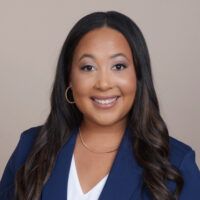
SCPS President-Elect Gillian Friedman, M.D., spoke with UC Riverside PGY-2 resident Adrienne Carter, M.D., who has just joined SCPS Council as one of the Inland Region Councillors.
FRIEDMAN: Dr. Carter, where did you grow up, and how did you decide to pursue a career in medicine, and ultimately psychiatry?
CARTER: It was quite a long journey. I’m from Oakland, California, and for the first two years of college I was at UC Riverside, but then I transferred to USC (University of Southern California). And during the entire time – even before undergrad, honestly – I always had the wish I could be a doctor, or the idea it would be fun to be a doctor. But I was intimidated by the thought of the MCAT and all the classes needed, and I didn’t really have a roadmap. I don’t have any other doctors in my family, although I have very supportive family. So I had the encouragement, but I was daunted by the challenges. So in undergrad I studied sociology. I really enjoyed it, but in the back of my mind I still thought, “I want to go to medical school.” So after graduation I did a postbac program, and that’s really when I started my journey toward medicine. I took all of my medical school pre-requisites, and I took the MCAT. And then prior to starting medical school, I worked with AmeriCorps as a community health worker. That experience is really what made me think of psychiatry as a possible career choice. As a community health worker, I made home visits with patients, and a lot of the patients were referred to me because their chronic illnesses were unmanaged or they were high utilizers of emergency departments. In doing the home visits, I got more insight into their day to day lives, and I realized a lot of the patients had unrecognized or untreated mental health conditions. Whether they didn’t have access to the resources, or maybe were resistant to getting treatment, or for whatever reasons, I realized these unmet mental health needs were a common thread. So that’s when I was able to identify that psychiatry would be an interesting career, kind of involving both sociology and medicine. Plus, I liked the teaching element, and I think there’s a lot of teaching in psychiatry as well. So it brought together a lot of my interests. And then as I went through my medical school rotations, I enjoyed psychiatry the most – and I continue to enjoy it as I finish my PGY-1 year.
FRIEDMAN: That AmeriCorps position sounds like a great opportunity to see how our patients live, which we don’t really see when we only see them at the office or at the hospital. I think a lot of people aren’t familiar with AmeriCorps. I’ve heard AmeriCorps described as being similar to the Peace Corps, but doing work inside the U.S. instead of abroad. Can you say more about AmeriCorps and how you came to work with AmeriCorps?
CARTER: AmeriCorps is a national service organization and the positions are one-year positions. The specific program I did was focused on health, and I was placed at a clinic in East Oakland. The program was centered around social determinants of health, and we had didactics about this area. I worked most specifically with food insecurity at the clinic. I helped create a partnership with the local food bank, the clinic, and another community organization; for instance, we had a veggie giveaway. It was a great experience because I really got immersed in the clinic and got to meet all the patients and the providers. Then at the end of that year, I decided to stay on at the clinic and work further as a community health worker. Primary care providers would refer some of their at-risk patients to me, so I got to work closely with the primary care doctors, social workers, and the patients to navigate things like accessing resources for transportation, food, or housing. I worked with someone who wanted to get their license back. It highlighted the importance of a lot of factors that often get overlooked in medicine. It’s very easy to tell a patient, “Go pick up your medicine.” But if someone doesn’t have a car or doesn’t have money or doesn’t even really know why the medication is prescribed, it makes it much less likely the patient will adhere to your recommendations. So it was a great experience for learning the medical system and also seeing the pitfalls patients often face when trying to access care.
FRIEDMAN: With that background, what have you noticed as you have gone through your PGY-1 year? As you’ve done your clinical work, have you seen opportunities where some of the things you did in your community work could improve patient care?
CARTER: Yeah, so many lessons from those prior roles really transfer over to my current role, especially in terms of just connecting with patients. It can be very easy to have a lot of assumptions about what a patient can or cannot access prior to getting to know them, and I think in the role of an AmeriCorps fellow or community health worker, I learned to put those assumptions to the side and actually listen to the patient and let them inform me so that I actually knew how I could help them. In psychiatry, there can sometimes be resistance from patients about starting a medication or just uncertainty about the process — like in emergency psychiatry, the process that occurs when someone is put on a hold. There’s a lot of anxiety about that, understandably, from patients. So, coming in and just listening first was one of the biggest lessons that I learned. In my projects on food insecurity, the groundwork was to first gather information on what kind of resources would actually be helpful instead of just assuming — taking the time to ask people, “What would be helpful to you?” So now when I meet with patients, I try to emphasize that the process may feel overwhelming, but I want to get to know you in order to know how I can help you the most. And of course I still see some of the problems I saw several years ago within the health care system regarding patients’ access to care, and sometimes feeling like they may not have a place in psychiatry, or being nervous about what psychiatry is. I see that especially within emergency psychiatry. So I think there’s a long way to go, but progress is occurring slowly.
FRIEDMAN: As you talk, I’m thinking about how easy it can be to get a little jaded in psychiatric settings like emergency rooms, particularly when we may see some of the same patients fail to follow advice at discharge, and then return in crisis night after night. It’s useful to remember, as you’ve pointed out, that if someone is experiencing food insecurity, domestic violence, gun violence, gang violence, worry about their or their family’s safety, etc., then filling and taking a prescription may not be high on their list of priorities. What we think is most important may not actually be the most important thing for their welfare. Patients may have significant needs we aren’t aware of.
CARTER: Yes, absolutely. All the time, I see this importance of listening more to patients, whether it’s inpatient or emergency psych. It’s really learning how to be patient with our patients, helping them navigate their unique circumstances, and helping assess which of our recommendations the patient is also in agreement with, working on what we can do together with the patient in partnership.
FRIEDMAN: What have been some of the highlights of your PGY-1 year, now that you’ve completed it?
CARTER: Definitely all of my psychiatry rotations! My favorite rotation so far has been Emergency Psychiatry, because I like the pace of it and I feel like I’m really making an impact. It’s the rotation where I feel most like a doctor. I feel like there’s a lot of room for me to grow and still feel supported by my attendings. But I’m finding confidence in the decisions that I make. I’ve also enjoyed off-service rotations, seeing how frequently psychiatric needs surface in all types of care. I remember that in an internal medicine rotation there was a patient who didn’t have a psych complaint, but had a lot of distress related to a CVA. I was able to recommend some medications to my attending that could be helpful for managing her anxiety, but I think my daily interactions with the patient were actually most helpful for the patient in helping him navigate and lower her anxiety. We talked about what it was like being in the hospital and what his concerns were, just providing the space for the patient to express his worries and the uncertainty that he was facing. His feedback to me helped reinforce that I picked the right career. It was interesting to see how much psychiatry came up even if I wasn’t in a psychiatry-focused rotation, and it was nice to know that I could have an impact in that way. Other highlights are just having great co-residents and a supportive program staff and program director. It’s nice to have a cohort of people behind me that are also focused on similar goals. There’s a lot that I can learn from them, and I feel I can also share some of my journey with them as well.
FRIEDMAN: You’re one of the new members of the SCPS Council for the 2026 – 2027 year, in the role of Inland Region Councillor. I know you’re brand new to the position, but at this early point, what has you interested in organized psychiatry?
CARTER: I’m interested in organized psychiatry because I realized that there are a lot of legal aspects to psychiatry. And I feel that through organized psychiatry, I can have a greater understanding of policies that could help patients and their families better. It provides a community to engage in and learn from as I’m starting out my journey in psychiatry. Apart from SCPS, I went to the Cal ACAP Advocacy Day (California Academy of Child and Adolescent Psychiatry). I was able to learn about some proposed legislation, and I was able to advocate to legislative staff for certain bills, talking about why it’s important and how patients are directly affected. I feel that, especially in psychiatry, being able to help advocate for patients on a larger scale ultimately helps me with the individual patient in front of me. Like when we’re talking about mobile crisis units, for instance, and if there are cuts to mobile crisis units, that’s affecting the patients that are directly coming in to see me — or maybe not being able to come in to see me, and maybe being rerouted through the criminal justice system instead. I feel that organized psychiatry is where I’m learning about those policies and how to incrementally make them better. It helps me be a more informed physician and psychiatrist if I’m learning about the issues affecting us and our patients from a much broader viewpoint.
FRIEDMAN: What would you say to colleagues about why they should become involved in organized psychiatry (American Psychiatric Association and their district branch)?
CARTER: Be an advocate on a larger level and have an impact that is seen across the system. Joining organizations that are involved in organized psychiatry allows you to learn about how you can advocate most efficiently. You will not only learn about the topics, but be in community with people that also really care about the topics too. I think that it can be intimidating to join, because honestly, prior to like midway through my PGY-1 year, I didn’t really know a lot about organized psychiatry, and I kind of just like stepped into it. And the more meetings that I’ve gone to, the more events that I’ve gone to, I really am learning how I can see myself fit into the community. Step your toe in and then you’ll kind of see that there’s a place for you and you’re really needed. And ultimately, it helps to create change across the system. Especially in psychiatry, especially if you’re working in public systems and with patients that may have less access to resources, or working in systems that have a lot of pitfalls in them. Those systems are relying on us to call something out when it’s wrong or propose a solution or create a committee or reach out to a legislator to ultimately help our patients. I think doing that with a team is just the most efficient way, and organized psychiatry creates that team and that focus for you.
FRIEDMAN: How did you choose a residency program in the Inland Empire? What about the region have you particularly liked for your training?
CARTER: I wanted a program that was very focused on working with under-resourced, underserved communities. When I started my journey as an AmeriCorps Health Fellow and as a community health worker, I was at a Federally Qualified Health Center, working with patients who have limited resources. That’s still where I see myself practicing in the future, so having an opportunity in residency to work in communities that are under-resourced was important to me. I’ve seen up close what can happen if people don’t have access to psychiatrists, or even psychiatrists that look like them, that come from similar backgrounds. I wanted to be in a program that had similar values in caring about diversity in medicine, and making sure that we have an impact in communities that really need it. I also liked the UCR program because we get to train at so many different sites. We don’t just have one hospital for all our rotations. We go to Kaiser, to Patton, to Riverside County facilities, to the VA — we’re all over. So I get to learn how to practice psychiatry in different systems of care. I’m happy that I’m able to bring some more care to this region.
FRIEDMAN: I know it’s still early in your residency training, but what are some of the things that you’re really looking forward to in the next 3 years and beyond?
CARTER: Just becoming more confident in my decision making. I think one of the special things about psychiatry is that there is a gray area with approaches for gathering information and creating solutions, and psychiatrists over time figure out what styles and techniques work for them. Which I think is nice because it allows you (or it forces you) to take the time to speak to patients — see what is going on in their life, call for collateral, look at their past psychiatric history — all of those factors go into how I assess a patient and determine their level of risk or their need for medication. I think even as only this first year has gone by, I can imagine back to my first patient, where I was thinking, “I don’t know. Is this the right decision?” And now as I’m ending my PGY-1 year, yes, there are still those gray areas where I’m very reliant on my attending, but there are also some great areas where I feel confidently that given the facts that I have, I’ve made the best decision I can at the time. I’m looking forward to really crafting my own practice of how I assess patients. Also, I have an interest in child and adolescent psychiatry, so I’m looking forward to my inpatient child and adolescent rotation. I’ve had some experience in emergency psych with children and adolescents, so more inpatient and more outpatient in those areas. I’m looking forward to having more opportunities to learn. I went to APA this year and that was great; I’ve also learned about some other conferences, and I know there’s another advocacy day coming up. I want to learn beyond just the clinical setting, and learn from people who have been in psychiatry for a number of years.
FRIEDMAN: I’d like what you said about developing your own personal style as a psychiatrist. One of my attendings in residency used to say the difference between psychiatry and all other areas of medicine is that in psychiatry you are using yourself as a therapeutic tool.
CARTER: Yes, that’s true.
FRIEDMAN: Anything I haven’t asked you that you would like to comment on?
CARTER: I would just say that I feel very lucky I’m in psychiatry. I feel like I’ve found my place in medicine. I mentioned in the very beginning that at first I was intimidated by the process — but now that I’ve gone through all the steps and jumped through all the hoops, I could not see myself doing any other career. I’m exactly where I’m supposed to be, and that’s very reassuring.
Editors note: Patient identity has been changed to protect confidentiality.
May Council Highlights
by Roderick Shaner, MD
Meeting Date: May 14, 2026
Next Meeting: June 11, 2026, 7:00 PM (Zoom)
President’s Report – Dr. Kelly
- Awards Ceremony Recap
Dr. Kelly and Council discussed highlights of the annual SCPS Installation and Awards Event held on May 3, 2026, at the New Center for Psychoanalysis. There was a consensus that the programming, venue, and timing of the event was excellent and that the presentations and awards were enthusiastically appreciated. The 2026-2027 SCPS Council was presented and installed. Mindi Thelen was recognized by Council for her excellent planning of the installation (and her good-natured acceptance of birthday congratulations and appreciation during the event in recognition of her birthday being on the same day).
- Membership Application Procedures
Dr. Kelly and Dr. Ijeaku, chair of the membership committee, led Council in a survey of current SCPS membership application process and selection procedures. APA procedures for application to APA and the district branches have evolved to permit granting of provisional APA membership to successful applicants, prior to a final decision left to the district branches. While this change has clear benefits for streamlining the process, it does necessitate review and possible revisions of associated SCPS applications and final decision making as well. As always, the goal is to ensure that SCPS facilitates the ease and clarity of the process for applicants and simultaneously ensures that SCPS membership standards for professionalism remain exemplary.
Passed Motion: That the salient issues be referred to the membership committee for further evaluation and consideration of recommendations to Council about potential changes to the application process and language regarding key questions.
President‑Elect’s Report – Dr. Halpin
- Newsletter: Halpin presented highlights of the May issue of Psychiatrist, including informative articles on perinatal mental health and human trafficking. She also noted that the next issue will be the final one for the current council year, with contributions due by early June.
- Election Results
Dr. Halpin, as chair of the Teller’s committee, directed the Council’s attention to the result of the 2026 SCPS election, noting the new officers and councilors. She noted the new officers and councilors would assume their roles immediately following the APA Annual Meeting, which ends on May 20, 2026.
Treasurer’s Report – Dr. Friedman
- April Financials:
Dr. Friedman indicated that Membership Dues Income was over budget, reflecting member reinstatements, but the final number of reinstatements is not yet available. Publications Income is over budget, perhaps reflecting increased advertiser interest. Overall Expenses for the month and year are under budget. SCPS’s total assets and liquid assets are both higher than at this time last year.
Assembly Report – Dr. Silverman
- Area 6 Council Meeting: Silverman reported that the April Area 6 Council meeting met during the APA meeting earlier in the week and highlighted several action papers that were referred to the Assembly for voting. She also noted that the A6 Council is debating key priorities for the coming year.
Government Affairs – Dr. Halpin
- Response to the HHS Launches MAHA Action Plan to Curb Psychiatric Overprescribing: Halpin outlined concerns regarding the MAHA action plan, specifically citing its potential to stigmatize use of essential psychiatric medications and to divert attention from HHS actions that undermine funding and support for clinical care and research. Based upon these concerns, a GAC subcommittee prepared an SCPS statement in response to the MAHA Action plan.
Passed Motion: That Council approve the SCPS Statement in Response to the HHS Launches MAHA Action Plan to Curb Psychiatric Overprescribing and share it on the SCPS website and social accounts, and with key legislators, NGOs, news media, and the general public.
- State Budget: Halpin reviewed the just released May revise of the 2027 California Budget, noting that it attempts to preserve essential health and mental health service funding that has been severely affected by federal funding cutbacks. The attempt is based upon favorable state revenue projections. Key among the items is $300 million to subsidize ACA health premiums and replace enhanced ACA subsidies. However, state funding of mobile mental health response teams will be shifted to counties.
- District Branch Coalitions: Referencing the GAC report from last month, Dr. Halpin updated Council on progress of forming DB coalitions to advocate for federal health and mental health policies more forcefully than has APA through its official positions and actions have done thus far. Members from several DBs, including SCPS have been meeting regularly to exchange information and ideas.
CSAP PAC – Dr. Shaner
- Shaner reported that the CSAP PAC board will consider major PAC donations for a potential gubernatorial candidate quickly after the results of the June 2nd primary elections are known. He also indicated that the Board will respond timely to CMA invitations to support key legislators, e.g., chairs of the Assembly and Senate Health Committees, along with other specialty delegations.
SCPS PAC TASK FORCE – Dr. Halpin
- Halpin anticipates that SYASL will bring together legal/accounting experts to provide guidance to Area 6 DBs on PAC contributions, organizational contributions, and related legal/tax issues after the pressure of the May legislative deadline passes.
Committee Reports
- Membership: Dr. Ijeaku reported that the membership committee has recommended acceptance of 5 RFMs and 10 GMs since the last Council meeting, and Council approved 14 of these, referring on application back to the committee for further review.
- Private Practice: Dr. Goldenberg reported on the successful “Private Practice 101 Part II” event on May 13th, led by Vicki and Elizabeth from Adelpha practice.
The Southern California PSYCHIATRIST
ALL EDITORIAL MATERIALS TO BE CONSIDERED FOR PUBLICATION IN THE NEWSLETTER MUST BE RECEIVED BY SCPS NO LATER THAN THE 1ST OF THE MONTH.
NO AUGUST PUBLICATION. ALL PAID ADVERTISEMENTS AND PRESS RELEASES MUST BE RECEIVED NO LATER THAN THE 1ST OF THE MONTH.
SCPS website address: www.socalpsych.org
© Copyright 2026 by Southern California Psychiatric Society
Southern California PSYCHIATRIST is published monthly, except August by the:
Southern California Psychiatric Society
P.O. Box 10023
Palm Desert, CA 92255
(310) 815-3650
Permission to quote or report any part of this publication must be obtained in advance from the Editor.
Opinions expressed throughout this publication are those of the writers and, unless specifically identified as a Society policy, do not state the opinion or position of the Society or the Editorial Committee. The Editor should be informed at the time of the Submission of any article that has been submitted to or published in another publication.
Disclaimer
Advertisements in this newsletter do not represent endorsement by the Southern California Psychiatric Society (SCPS), and contain information submitted for advertising which has not been verified for accuracy by the SCPS.
SCPS Officers
President – Laura Halpin, M.D., Ph.D.
President-Elect – Gillian Friedman, M.D.
Treasurer – Daniel Fast, M.D.
Secretary – Manal Khan, M.D.
Councillors by Region (Terms Expiring)
Inland – Adrienne Carter, M.D. (2027); Kayla Fisher, M.D. (2027)
San Fernando Valley – Yelena Koldobskaya (2028); Kelsey Badger, M.D. (2029)
San Gabriel Valley/Los Angeles-East – Timothy Pylko, M.D. (2029); Roderick Shaner, M.D. (2027)
Santa Barbara – Nassi Navid, M.D. (2029)
South Bay – Steven Allen, M.D. (2027)
South L.A. County – Emily Wood, M.D., Ph.D. (2026)
Ventura – Danielle Shaw, M.D. (2029)
West Los Angeles – Haig Goenjian, M.D. (2027); Tanya Josic, D.O. (2027); Lloyd Lee, D.O. (2027); Alex Lin, M.D. (2029)
ECP Representative – Ruqayyah Malik, M.D. (2027)
ECP Deputy Representative – Dustin Wong, D.O. (2028)
RFM Representative – Ola Egu, M.D. (2027); Daniel Resnick, M.D. (2027)
MURR Representative – Miles Reyes, M.D. (2027)
MURR Deputy Representative – Vanessa Markgraf, M.D. (2028)
Past Presidents – Matthew Goldenberg, D.O.; Galya Rees, M.D.; Patrick Kelly, M.D.
Federal Legislative Representative – Laura Halpin, M.D., Ph.D.
State Legislative Representative – Emily Wood, M.D., Ph.D.
Public Affairs Representative – Christina Ford, M.D.
Assembly Representatives – Matthew Goldenberg, D.O. (2029); Ijeoma Ijeaku, M.D. (2027); Patrick Kelly, M.D. (2030); J. Zeb Little, M.D., Ph.D. (2030)
Executive Director – Mindi Thelen
Website Publishing – Tim Thelen
SCPS Newsletter Editor – Gillian Friedman, M.D.