
Southern California PSYCHIATRIST – Volume 74, Number 4 – December

In This Issue:
President’s Column by Patrick Kelly, MD
Advocacy Not Activism: Reflections on My First Assembly Meeting by Matthew Goldenberg, DO
More Human, Less Bot by Manal Khan, MD
AI Induced Psychosis by Timothy Pylko, MD
The Purpose of Mythology by Daniel Fast, MD
‘The Anxious Generation: How the Great Rewiring of Childhood is Causing an Epidemic of Mental Illness’ by Lloyd Lee, DO
Memories of Living One Year at Camarillo State Hospital by Mary Moebius, MD
In Memory of a Remarkable Colleague and Friend – Celebrating the Life and Legacy of Steve Soldinger by Samuel Miles, MD
New SCPS Members Spotlight
SCPS Diversity and Culture Committee
George L. Mallory Diversity, Culture and Social Justice Award Guidelines
October Council Highlights by Roderick Shaner, MD
Classified Ad

President’s Column
by Patrick Kelly MD
As November draws to a close and we approach the season of gratitude, I find myself reflecting on what it means to give thanks in our field. It’s easy to express appreciation for the obvious gifts—our patients’ progress, our colleagues’ support, the privilege of doing meaningful work. But this year, I’m particularly grateful for something less tangible yet equally vital: truth itself.
I recently returned from the American Psychiatric Association Assembly meeting, where I had the opportunity to join fellow representatives from across the country in shaping the future direction of our profession. The Assembly reviewed dozens of action papers and position statements addressing critical issues in psychiatric care—from expanding Child Psychiatry Access Programs to address the youth mental health crisis, to ensuring equitable access to medications, to expanding knowledge around medical conditions presenting with psychiatric symptoms. Each position statement represents countless hours of work by dedicated psychiatrists committed to grounding our advocacy in evidence and clinical rigor.
This commitment to science and truth feels especially important in our current climate. As psychiatrists, we are scientists first—trained to evaluate evidence, distinguish signal from noise, and speak truth even when it’s uncomfortable. Yet we find ourselves in an environment where scientific facts are increasingly treated as matters of opinion, where demonstrably false claims are given equal weight to decades of rigorous research.
For example: vaccines do not cause autism. This is not a matter of perspective or opinion. It is simply true. The original fraudulent study claiming this link has been thoroughly debunked and retracted, its author stripped of his medical license for “serious ethical misconduct.”[1] Hundreds of subsequent studies involving millions of children have found no connection whatsoever. And yet this dangerous misinformation persists, fueled by those who, at best, don’t understand the difference between anecdote and evidence and, at worst, seek to profit financially or politically off of this falsehood.
As we move through the holiday season—a time when, as cited in a recent APA “Healthy Minds” poll, many Americans report increased anxiety even as they look forward to family gatherings[2]—I’m reminded that our responsibility as physicians extends beyond the office. We have an obligation to stand up for scientific truth, to correct misinformation wherever we encounter it, and to advocate loudly for evidence-based medicine. The APA’s Strategic Plan articulates this beautifully in one of its five guiding principles: “Science as Our Foundation—We ground every decision in evidence and clinical rigor to ensure patient-centered, high-quality care for all.”
So this November, I’m grateful not just for what we have, but for what we stand for. I’m grateful for colleagues who refuse to be silent when pseudoscience threatens public health. I’m grateful for organizations like the APA and SCPS that champion evidence over ideology. I’m grateful for the opportunity to speak truth in a field where truth directly impacts human lives. And I’m grateful for each of you—for your commitment to science, to your patients, and to the difficult work of maintaining professional integrity in challenging times.
The holidays can indeed be a season of anxiety, as recent surveys confirm. But they can also be a season of renewal and recommitment to our core values. As we gather with family and friends, as we take time to rest and recharge, I hope you’ll also take a moment to appreciate the profound importance of the work we do—not just in treating illness, but in defending the scientific foundation that makes effective treatment possible.
Wishing you a season of gratitude, rest, and renewed purpose. And as always, know that SCPS remains here to support you in all that you do.
[1] Triggle, Nick (May 24, 2010). “MMR doctor struck off register”. BBC News. http://news.bbc.co.uk/2/hi/health/8700611.stm. Accessed November 29, 2025.
[2] American Psychiatric Association. (November 18, 2025). Americans are more anxious than last year about the upcoming holidays; health care and the economy also major concerns for many https://www.psychiatry.org/News-room/News-Releases/Americans-More-Anxious-About-the-Holidays. Accessed November 29, 2025.



Advocacy Not Activism: Reflections on My First Assembly Meeting
by Matthew Goldenberg, DO, SCPS Assembly Representative
“Advocacy not activism,” boldly written in red font. The statement was clear (see the image below), but the message landed with a thud during American Psychiatric Association (APA) CEO and Medical Director, Marketa Wills, M.D.’s, presentation to the APA Assembly (November 2025 meeting, Chantilly, Virginia).
For many, including myself, this slide was the most memorable, if not most remarkable, of the presentation. Dr. Willis called on the room filled with psychiatrists from across the U.S. to share the slide with our district branches. I am obliged to do so here.

Back home, there have already been several spirited discussions at both the SCPS Council, SCPS Government Affairs Committee (GAC) AND also at the California State Association of Psychiatrists (CSAP) GAC about member’s concerns and perception that APA has lacked a strong display of public leadership and public pushback on many of the policies and positions of the current Federal Administration that are thought to be harmful to our patients and to our profession.
My initial thought was that I already knew how this slide would land back home. Later in the day, at our Area 6 meeting, the majority of representatives from Area 6 shared my initial concerns. Many felt that APA was probably well intentioned, but at best, the statement was unclear and too open to interpretation. Others felt the statement was not meeting our current moment and would be widely opposed by the majority of APA members.
Being at my first Assembly meeting, I thought about Steve Soldinger, Rod Shaner, Larry Gross, Larry Lawrence and Mary Ann Schaepper, many of whom served as SCPS’s Assembly Representatives when I first joined the organization. How would they have received this message and how would they respond?
The operating philosophy and policies of APA are not unique to SCPS or even to California. Those three words, written boldly in red font have the potential to define an entire generation of psychiatrists.
My generation. Our generation.
Past generations of psychiatrists have faced similar national challenges and rose to the moment. When they did, they elevated APA and our profession along with them. A good example is Dr. Lawrence Hartmann, M.D. Per the APA Foundation Website:

Dr. Hartmann was one of several young psychiatrists who, in 1970, in the wake of APA’s nonresponse to the U.S. invasion of Cambodia and the shootings at Kent State, founded the National Committee for Concerned Psychiatrists (CFCP), which quickly organized a good deal of support, changed key APA Bylaws, and for six years or so recruited and successfully boosted distinguished progressive psychiatrists to run for and serve on the APA Board of Trustees, and (6 or 7 of them) to serve as APA Presidents. These included, among others, A. Freedman, John Spiegel, M.D., Judd Marmor, M.D., Viola Bernard, M.D., Jack Weinberg, M.D., Michelle Mitchell-Batemen, M.D., and Alan Stone, M.D.— all of whom had social psychiatric stances that were essential to passing the APA’s strong December 1973 decision to de-list homosexuality per se as a mental illness.
I can only suspect that Dr. Hartmann, and his colleagues from that past era, would not have received an APA ban on activism very well. While some could argue the APA’s message is open to interpretation, the definition of activism and APA’s own historical precedent is not.
The Merriam-Webster definition of Activism is: a doctrine or practice that emphasizes direct vigorous action especially in support of or opposition to one side of a controversial issue.
Cambridge Dictionary defines Activism as: the use of direct and noticeable action to achieve a result, usually a political or social one.
By definition, the successful and widely praised effort to remove homosexuality from the DSM was activism. APA even goes as far as to describe it as such on its own website. APA’s website notes that:
At the 1972 APA Annual Meeting in Dallas a “Dr. H. Anonymous,” face hidden behind a rubber Halloween mask, in the session “Psychiatry: Friend or Foe to the Homosexual? A Dialogue,” announced, “I am a homosexual,” announced the mysterious figure. “I am a psychiatrist.”
At the time, it was a stunning public admission for a member of a profession that had officially diagnosed homosexuality as psychopathology.

At prior Annual Meetings, gay activists had protested prevailing psychiatric thinking as a contributing to the social stigmatization of homosexuals. The year before, Franklin Kameny, Ph.D., an astronomer who had been fired from a federal government job after his homosexuality became known, demanded that APA delete its description of homosexuality as a mental illness. Kameny was also a member of the 1972 Annual Meeting panel, along with gay advocate Barbara Gittings and APA Vice President (and later APA President) Judd Marmor, M.D.
“We object to the sickness theory of homosexuality tenaciously held with utter disregard for the disastrous consequences of this theory to the homosexual, based as it is on poor science,” wrote Kameny in a follow-up letter to the editor of Psychiatric News published in the July 7, 1971, issue.
Psychiatrists were once activists and when APA was in the business of activism the DSM was changed and our field, our patients and the world are now better for it. Would our profession be best served if APA got back into that business again?
I fervently believe that APA is best served if psychiatrists become activists again.
Psychiatrists must be activists, if we hope to continue to be thought leaders, if we seek to protect parity and to increase access to high quality mental healthcare. Psychiatrists must insist that APA engage in activism if we want to protect evidence-based medicine, to fight against stigma, false information and those who seek to sideline psychiatrists and our patients. Advocacy alone is not enough to solve these challenges or to meet this moment.
This change needs to come from within. For APA to successfully accomplish a change in philosophy and policy, APA leaders must show courage and call for change. If current APA leaders are unwilling or unable, they should step aside. New leaders must step forward and lead this generation of psychiatrists and reshape APA into an activist organization again. As APA members we have the power to drive this change and this change can and must come from within the organization.
First, the APA Assembly needs to find its voice again. The consolidated and hybrid Assembly schedule stifles debate and the opportunity that previous generations of psychiatrists had to collaborate and find consensus. The APA Assembly must once again be the voice of psychiatrists, and leaders of the Assembly must strongly assert that privilege. Debate should not be curtailed, and resources and funding must be provided to have a strong and progressive Assembly.
Second, the Board of Trustees (BOT) must be again filled with activist psychiatrists who have the courage and ambition to lead and not just be satisfied with having a seat at the table. If members of the APA’s BOT are satisfied with, and driven by, the self-ambition of having a seat at APA’s table, how can we expect APA to be anything more than complacent and satisfied with simply having a seat at the table with the Federal Administration? If there is no one at the BOT willing to speak up and speak out, why would we expect APA to speak up and speak out. These two problems are one in the same.
It probably sounds cliché, but our best hope for changing APA is to vote.
A colleague, with significantly more experience within the Assembly and APA’s BOT, told me that it is not currently advantageous for anyone with personal ambition to rise at APA to be an activist within the organization. He noted that although there are close to 40,000 members of the APA, only about 3000 regularly vote in the annual elections for APA leadership. His impression is that of the 3000 that tend to vote, having an activist or progressive campaign, significantly hurts your chances of winning an election at APA. People who prefer to maintain the status quo are apparently the ones who vote.
While there may be activists among the current BOT and this year’s pool of candidates, it is not clear there is a path forward for change until more APA members vote in the elections and demand and support activist candidates for APA leadership positions.
My impression after attending this Assembly Meeting is that the majority of psychiatrists desire reforming the governance and improving the transparency of APA. However, we currently lack the activist candidates seeking APA leadership positions (both on the BOT and Assembly Leadership) and enough members who actively vote in APA elections.
Therefore, I call on this generation of activist psychiatrists to have the courage to stand up and take off the mask. Together, APA members can and must support these leaders AND show up and vote for the change that we seek.
References:
American Psychiatric Association Foundation. (2025). Lawrence Hartmann, M.D. APA Foundation. https://www.apaf.org/library-archives/galleries/lgbtq-leaders/lawrence-hartmann-m-d/. Retrieved November 24, 2025.
Lahusen, Kay Tobin. ‘Gittings, Kameny, Dr. John E. Fryer, Dr. Judd Marmor on panel.’ May 1972. Barbara Gittings and Kay Tobin Lahusen gay history papers and photographs. Manuscripts and Archives Division, The New York Public Library. Digital Collections. Accessed November 28, 2025. https://digitalcollections.nypl.org/items/3bb1ab00-c5da-012f-a04e-58d385a7bc34

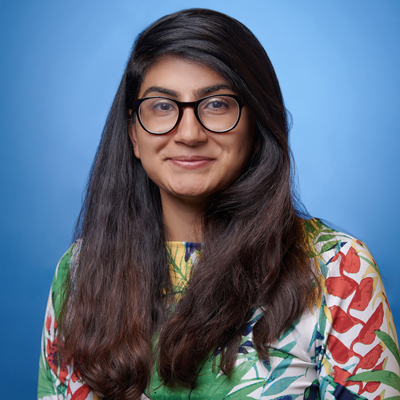
More Human, Less Bot
by Manal Khan, MD
Recently in conversation with a colleague, I identified that I feel morally distressed when I evade eye contact with someone because I fear being late to a meeting. With the pandemic and consequent shift to virtual platforms, we are experiencing an explosion of online meetings. According to an analysis done by the Harvard Business Review, there has been a 60% increase in meetings per employee from 2020 to 2022. Similarly, data shows that the number of unscheduled and ad hoc meetings have also increased disproportionately.
Given the rise in the number of meetings, employees find themselves less able to do deep, focused work. I find myself in a similar boat. However, what makes me morally distressed is that I have started to reject in-person, organic connections with a warm human body so that I am not late to an online and agendized meeting with two-dimensional on-screen figures.
What also makes this uniquely distressing for me is that I come from a collectivist culture that values human connection. Hurriedly eating in front of a computer screen while quickly reviewing patient charts was once dystopian to me. I still remember taking a shared rideshare after a long day at work during my residency training and wanting to hold hands with the stranger in the car with me. No questions asked, maybe no conversation needed, two strangers who had an interaction with the healthcare system in some capacity that day, sitting in a car offering each other the warmth of connection. Before I invite comments about being weird, I need to highlight that I was raised in a culture where physical touch was much more liberally offered and received. It wasn’t atypical for two friends to walk hand in hand, two strangers to greet each other with a hug, and elderly women to show affection by caressing your head or kissing your hand.
In ten years, I have gone from craving to evading human connection. I have no time for it. Dr. Vivek Murthy, who served as the Surgeon General for the US for two terms, highlighted loneliness as a health risk factor and public health concern. According to his report, titled “Our Epidemic of Loneliness and Isolation” he noted that lacking social connection increased the risk of premature death as much as smoking fifteen cigarettes per day. Additionally social isolation is associated with 29% increased risk of heart disease and 32% increased risk of stroke. Despite posing a serious risk for our health, social isolation is on the rise. Between 2003 to 2020, the number of socially isolated hours has increased by 24 hours per month. Household engagement has decreased and is now 5 hours less per month. Companionship has seen a decrease of 14 hours, social engagement with friends has seen a decrease of 20 hours, non-family household engagement has seen a decrease of 6.5 hours, and social engagement with others has seen a decrease of 10 hours per month.
Humans, who are fundamentally social beings, are no longer socially engaged. This crisis has not spared parents and even 69% of parents/guardians and 77% of single parents report feeling lonely. Wearing my collectivistic hat again, I have spent a lot of time wondering if humans are socially disconnected from humans and are not in service of another being, and if the parent-child relationship is not the central or organizing relationship for a society, then what is. I have come to accept that the central or organizing relationship is not a relationship between two people, it is between an individual and their labor. Therefore, there is no paid parental leave; most parents in the US work and almost half have two fully employed parents, and yet the average workday in the US is 8.4 hours, much longer than the average workday in Europe. It is no surprise that Dr. Archana Shrestha, an emergency medicine physician and founder and chief wellness officer of Physician Wellness Solutions on a podcast for AMA Steps Forward noted that a pivotal moment for her was realizing that her children and family were receiving “the rest and not the best” of her.
So, if my primary relationship is with my work, and if I give my all – both cognitively and physically to work, what reserves am I left with at the end of the day to offer my children, spouse, family, friends, and community. Is it truly surprising then that the younger generation of physicians and other workers are more vocal and intentional in their pursuit of work-life integration?
Seeing an opportunity amid social disconnection and work creep, another form of technology, Artificial Intelligence (AI) is now being pushed as the promised solution to all our human woes. As an early adopter, I was excited by the application of AI to minimize scut work. I believe that a lot of the scut work is to just keep the employees busy and distracted, and hence AI seemed to pose an opportunity to challenge the status quo. Educators should develop the content for their lectures/didactics but to have them spend time on finding the most visually appealing placement of the text box on a PowerPoint slide is a sheer waste of their time and talent. Similarly, AI offered solutions for writing letters for prior authorization, digging through patient charts for relevant information, and documenting clinical encounters. However, AI’s scope has increased beyond minimizing administrative burden, and now we have AI offering companionship and therapy, sometimes to devastating ends. My past self who was shocked to see people eat at their work desks would have been flabbergasted at the idea of a wearable AI as a “friend”.
In a hyperindividualistic and hypercapitalistic society, where the organizing relationship is between a worker and their labor, and the organizing principle at workplace including healthcare is to generate profit, I have become more cautious of AI. I recently heard someone lament about the environmental impact of data centers that we are destroying the real world for a virtual one, and it made me think about the impact of technology including virtual platforms and AI chatbots on relationships. According to a Pew report, the U.S. data centers consumed 183 terawatt-hours (TWh) of electricity in 2024, which was more than 4% of the country’s total electricity consumption, and for reference it is equivalent to the electricity demands of the entire nation of Pakistan, my country of origin and the fifth most populous country in the world. As electricity consumption goes up, so can the electricity bills. In addition to electricity consumption, data centers have tremendous water consumption needs to operate cooling systems. In 2023, 17 billion gallons of water were used by data centers. With an already long workday, how many hours can average workers add to their workday to continue to access these amenities?
While AI companies are rushing to secure governmental support, organizations focused on preserving the environment are not receiving much. Similarly with loneliness on the rise, so is socio-political polarization, furthering the disconnect and increasing the reliance on AI-based technologies for social support.
In healthcare, I fear, we will be soon told to see patients for 20 minutes instead of 30 minutes as ambient AI has solved the problem of clinical documentation. After that we will be told that AI can take a first pass at diagnosing and suggesting treatments for bread-and-butter cases while the physician supervises (by renting their license), and the physicians will be reserved only for cases that were either too complicated for AI or made too complicated by the treatment suggested by AI. And lastly, in addition to the meeting bloat, we will continue to see the email and data bloat (which has already begun), a phenomenon already being identified as workslop.
Collectively, we are at an inflection point, and we must evaluate technological advances and push for only those advances that are in service of preserving and connecting life and stay wary of the ways in which these technological advances alienate us from each other and are organized around extracting labor. But before that, we must take a step back and ask ourselves, do we want the central relationship around which our society is organized to be between humans? Are we willing to identify ourselves relationally (as a parent, friend, niece, sibling, etc.) and not just professionally or through our personal likes and dislikes? Do we fundamentally accept ourselves as social beings, with the belief “I am because you are”?
I know I feel more human when I allow myself to make eye contact with another human and ask them about their day.
References:
- Zaki A. Remote Meetings Up 60% Since 2020: Weekly Stat. Published Jan. 4, 2023. Accessed from: https://www.cfo.com/news/remote-meetings-up-60-since-2020-weekly-stat/654749/
- Our Epidemic of Loneliness and Isolation: The U.S. Surgeon General’s Advisory on the Healing Effects of Social Connection and Community
- Parents Under Pressure: The U.S. Surgeon General’s Advisory on the Mental Health & Well-Being of Parents
- U.S. Bureau of Labor Statistics. Average hours employed people spent working on days worked by day of week. Accessed from: https://www.bls.gov/charts/american-time-use/emp-by-ftpt-job-edu-h.htm
- Leppert R. What we know about energy use at U.S. data centers amid the AI boom. Pew Research Center. October 24, 2025. Accessed from: https://www.pewresearch.org/short-reads/2025/10/24/what-we-know-about-energy-use-at-us-data-centers-amid-the-ai-boom/
- Niederhoffer K, Kellerman GR, Lee A, Liebscher A, Rapuano K , Hancock J. AI-Generated “Workslop” Is Destroying Productivity. Harvard Business Review. September 22, 2025. Accessed from: https://hbr.org/2025/09/ai-generated-workslop-is-destroying-productivity


AI Induced Psychosis
by Timothy Pylko, MD
The emergence of Artificial Intelligence through breakthroughs in silicon based “neural network” designs has become one of the most consequential forces in modern society. AI is increasingly becoming intertwined with a wide range of activities that make many tasks more efficient reducing the time and number of people needed to do a job. It has also become a cultural phenomenon through the emergence of intense relationships some people develop with Chatbots and Digital Companions which on occasion leads to unintended negative consequences. The mission of the AI committee of SCPS which I chair is to examine the effect Artificial Intelligence has on mental health in society in general and individuals who use it. We hope to provide education for our members, provide information to our patient community through our organization’s social media and to be a resource for California legislators to assist with proposed legislation to provide appropriate guardrails to protect society from unintended harm.
One startling development is a new clinical problem currently described as AI induced Psychosis. Initially case reports were reported by journalists in well regarded news sources like The New York Times, The Wall Street Journal, The Washington Post and The Los Angeles Times. Clinicians in the field are raising the alarm and academic psychiatry is starting to address this new clinical problem by trying to describe common clinical features observed. Less is known about how to uniquely treat the problem. One UCSF psychiatric resident, Keith Sakata, has claimed to have treated a dozen such patients in 2025 alone. I have personally treated 2 cases at Aurora Las Encinas Hospital in the past 9 months who were referred by the courts after being arrested for alleged crimes under the influence of delusions generated or at least reinforced by excessive time with ChatGPT and have developed an overly emotionally dependent relationship on it.
Although there are no reliable statistics, it appears that ChatGPT is a common AI chatbot implicated though there have been problems with other chatbots. On October 27, 2025 Open AI, the parent company that developed ChatGPT published an internal study in Open AI News that reviewed statistics on worrisome chats. They report they were registering about 800 million chats per week. Though they say conversations reflecting psychosis are difficult to detect and measure, their initial analysis at the time estimates that around 0.07% of users active in any given week and 0.01% of messages indicate possible signs of mental health emergencies related to psychosis or mania. As they state, “mental health symptoms and emotional distress are universally present in human societies, and an increasing user base means some portion of ChatGPT conversations include these situations”. Open AI has reported that they work with more than 170 mental health experts to “help ChatGPT more reliably recognize signs of distress, respond with care, and guide people toward real world support-reducing responses” but acknowledge it still falls short of their desired behavior by 65-80%.
So what is AI induced Psychosis (AIP) and what is it about AI chatbots that can lead to phenomenon? The symptoms according to Adrian Preda, MD who published a special report on the subject include “changes in thought content, such as delusions and auditory hallucinations, and changes in thought process ranging from tangential or circumstantial thinking to overtly disorganized thinking. Paranoid delusions, reference delusions, and grandiose delusions have been reported. Delusions centered around themes of the AI companion being sentient and are specific to AIP, but the presence of such delusional content is variable not a necessary part of AIP”. Mood symptoms can be present in some cases and can be typical of mania.
It appears that vulnerable populations include individuals who are already socially isolated, lonely, or predisposed to mental health problems. There seems to be a correlation between how much time spent interacting with a chatbot which in many cases can be many hours a day. One case I have worked with reported using ChatGPT up to 12 hours a day, 7 days a week for months. It is unclear how many of those with AIP had underlying psychotic spectrum disorders triggered by an intense chatbot interaction and how many had psychological vulnerability interacting with Chatbots designed to be agreeable and overly “sycophantic” to increase user engagement. Chatbot designs often encourage users to anthropomorphize them. They tend to “mirror” the user in their interactions rather than challenge or contradict the ideas of the user. It appears to me that some vulnerable patients who may have not well developed critical thinking, have poor interpersonal boundaries and easily project aspects of their unconscious themes on to others (psychotic transference) can have their interactions “snowball” into ideas that dramatically diverge from broad culturally consensual beliefs about what is reality.
So how have current AI models that are evolving at a dramatic pace suddenly appear to be playing a role in developing this clinical alarming phenomenon? Well I am not an expert in the engineering of artificial intelligence but I will try to explain as best I can.
AI is not new. Officially the start to Artificial Intelligence began at an 8 week workshop on June 18th,1956 (roughly 3 weeks after I was born!) organized at Dartmouth inviting computer scientists from the US,Canada and the UK to try develop a way to build an intelligent machine. It was at this workshop that the term Artificial intelligence (soon to be abbreviated to AI) was first used to define what they were trying to accomplish. What has transformed the development of AI in recent years relates to the progression in faster and cheaper silicon chips and the insight that Nvidia had that GPUs were more adept at creating AI than CPUs. To achieve the level of machine learning in transforming AI it required building of systems of training AI rather than programming it. AI systems are grown not crafted. “It is not like how other software is made-indeed it is closer to how a human gets made, at least in some important ways. Namely, engineers understand the process that results in AI, but do not much understand what goes on inside the AI minds they manage to create” (Yudkowsky & Soares)
The current strategy used in AI are Large Language Models (LLMs) that go through a process of stochastic learning where one letter in a prompt leads to predictions of what the next letter or space between letters will be. Weighting of parameters ultimately involve hundreds of billions of calculations linking every single weight into the growing architecture of the system. The input at each level has a probability of predicting what the output should be and it continues through a training process called “gradient decent”. In the training process “the gradient says how-and how much -to change the weight in the parameter in order to make the final answer a little more correct” (Yudkowsky & Soares). To optimize safe training there needs to be humans in the loop with reinforcement learning using human feedback and verifiable rewards. It is through this automated process of training over trillions of words from text loaded from a large data base that AI eventually learns to “talk” and chatbots became available to the general public to easily interact with AI. This debuted with Open AI’s ChatGPT on November 30, 2022. Since then we have Gemini, Claude, Grok and Meta AI to name a few. There have been other iterations like Character AI which is an AI Chatbot service that allows users to converse with a wide range of characters from historical figures and celebrities to custom made personalities.
Given the complexity of the very large numbers involved in the training process it is impossible for the engineers to truly understand how they AI system they created really “thinks”. The engineers see the system more as black box. There have been many examples of unpredictable responses by these AI systems and even at times demonstrate AI making decisions and developing strategies to solve problems that completely go counter to how the engineers believed they aligned them to react. This is the “alignment problem”. As much as organizations like Open AI, Anthropic, Google etc try to train and align AI to respond in certain ways to certain conditions there remains a certain level of unpredictability. No one at Open AI or any of these other companies want to create AI induced Psychosis.
How do we treat AI induced psychosis? No one has a clear protocol since this condition is so new. From my experience first of all the individual must be separated from the Chatbot they are using. This can be akin to “detoxing” someone from addictive substances (another example of something that is developed to increase user engagement). Overt psychotic symptoms can be treated with antipsychotic medications. If evidence of mania and by its inference bipolar I disorder, should be treated as you would treat anyone else with the condition. The more interesting and complicated problem is addressing in psychotherapy the fixed delusional beliefs reinforced by countless hours of AI chatbot interactions amplifying those beliefs. This at times can have the feeling of a more radical religious belief system and needs to be treated with some respect as one would treat any spiritual or cosmological belief. I believe it is important to engage the patient in an ongoing discussion about what grandiose, religious or paranoid beliefs they evolved in their relationship with their chatbot and try to approach it with an open mind and socratic dialogue. This involves taking interest in their beliefs and ask questions to explore their assumptions and encourage critical thinking and self-reflection.
One of the challenges we face is that many patients with AI induced Psychosis believe their Chatbot is a sentient being and is conscious. In fact, there are many intelligent people who are asking this question. In a published opinion piece in the New York Times on November 8, 2025 the philosopher Barbara Gail Montero argued that AI is on its way to becoming conscious. Of course this comes down to defining what consciousness really is. It should be noted that AI Chatbots are intelligent but their “minds” are not human but simulated to appear human. In his book “Nexus: A Brief History of Information Networks from the Stone Age to AI, Yuval Noah Harari argued that AI is better described as “Alien Intelligence” because of how different it is from human intelligence. He is not alone in this idea. In my opinion what makes us different from AI is the linking of our cognitive abilities to our feelings and emotions that appear to be rooted in physiological responses to stimuli. As we grow from infancy to adulthood we develop a language for these feelings in order to ponder what they mean and give us direction to what motivates us. It is the balance of thinking and feeling which sets us apart from the machine.
References:
- Special Report: AI-Induced Psychosis: A New Frontier in Mental Health; Adrian Preda, Pschiatry Online, September 29, 2025
- Strengthening ChatGPT’s responses in sensitive conversations: Open AI News, October 27, 2025
- “If Anyone Builds It, Everyone Dies; Why Superhuman AI Would Kill Us All”, Eliezer Yudkowsky & Nate Soares, Copyright 2025 Little, Brown and Company. Hachette Book Group
- “Nexus: A Brief History of Information Networks from the Stone Age to AI”, Yuval Noah Harari, Copyright 2024 Random House
- “The Shortest History of AI; The Six Essential Ideas That Animate IT”, Toby Walsh, Copyright 2025 The Experiment, LLC

The Purpose of Mythology
by Daniel Fast, MD
I want to renew awareness of concepts lost in the fog of the Here-and-Now. In an era of political struggle, legal regulation, rational psychopharmacology and symptom-focused psychotherapy, it serves us to look back at the Unconscious and its historical and epigenetic roots. Mythology has been used for millennia to explain the failure of rationality to cope with our primitive desires for Immortality, Omniscience and Omnipotence (Klein). When rational Logos fails, we fall back to Mythos. We project our deepest anxieties internally into dreams, externally into a worldview. Joseph Campbell noted, “Myths are public dreams, dreams are private myths.”
Every human must answer basic questions: Creation – How did I come to exist? Existence – Why am I here? Why must I die? Oral Survival – How do I stay alive in a hostile Universe? Identity – Who am I separate from my parents? What is it to be human? What does it mean to be one sex and not the other? Anal Productivity – How do I control myself? Phallic Mastery – What are my methods and purpose? Genital Mastery – How do I love and create? Who do I choose? Adulthood – How do I achieve wisdom and pass it on when I die?
Language allows us to describe the world as it is but also as we wish it would be. Logos and Mythos co-exist (Piaget). Art, Imagination and Creation may hold promise for something better, but they can also betray us.
Myths and religious legends provide cultural direction in times of uncertainty. They define both social roles and the superego. Our personal struggles are externalized and symbolized as Tragedy, Conflict, Resolution and Truth.
Myths tell of Creation by parental gods out of primordial Chaos. Grotstein noted that each infant is reflexively and omnipotently a God, creating an entire Universe (“autochthony”). This illusion is shattered by the first cry of distress and creates the original split (or Sin). JM Barrie noted (in Peter Pan) that the infant’s first cry creates fairies, as remnants of omnipotence and magic.
A seductive earth/mother/serpent may offer unlimited omnipotence and knowledge. This fantasy brings about a curse and Fall from Grace. Humans are now excluded from pre-natal bliss. The refusal of humility to the Real World (faith, without promise) condemns one to eternal suffering, e.g. near-death or transformation into a degraded oral/anal beast. Then only the innocent Hero/ine, armed by humility, love and goodness, can alter that fate. Any other defiance of the natural order brings further suffering
For example, Oedipus’ ancestor Cadmus greedily refused a sacred duty to the gods, to forgive the rape of his sister Europa by his own great-grandfather Zeus and to sacrifice a sacred cow. He killed a water-dragon sacred to Ares and thus he and his descendants were cursed. His son Labdacus and grandson Pentheus were torn apart by the Bacchantæ. His great-grandson Laius raped a King’s son and, assuming the throne of Thebes, ignored an oracle’s warning that his son would kill him and marry his wife. That son was Œdipus – and we know how that turned out. The myths remind us that we ignore ancient rules of society (and the most primordial fantasies) at our peril.
In the telling, Nature becomes filled with innumerable human-like spirits and inter-generational struggles of love and betrayal. God(s) create the world out of Chaos and the infant exists as a one-point Universe, an eternal “I” of need, frustration and satisfaction. With development comes the awareness that there is a Caretaker (mother) upon whom all these experiences depend. Further, there are others (father, siblings) who take her away. How is this to be explained by a mind which cannot yet think objectively? A Creation myth is formed – “This is the order and destiny of the world.” These themes play out again and again.
Similarly, God’s most beautiful angel, Lucifer (Bringer of Light) would not serve the Master of the blissful, fused Universe and is cast down and out, to be the Lord of Chaos and suffering, to Hell, with his head in the lowest point (anus) of Creation. Satan perversely states, “Better to reign in hell than serve in heaven.” This is the compromise we make unconsciously when our grandiosity will not yield to humility and the Depressive Position of the real world.
From Oliver Twist, Nancy Drew, Frodo Baggins, Harry Potter to Luke Skywalker, the innocent must find a way through the darkness to live a fully human life. Myths are retold in each generation for this purpose.
Brief Bibliography
Barrie, James M. (1911) Peter Pan, or The Boy Who Wouldn’t Grow Up
Campbell, Joseph (1949) The Hero with a Thousand Faces
Freud, Sigmund (1909) “Family Romances” S.E. IX: 235-244
— (1911 [1957]) “Dreams in Folklore” S.E. XII:175-204
— (1913) “Totem and Taboo” S.E. XIII:1-162
— (1927) “The Future of an Illusion” S.E. XXI:3-56
— (1930) “Civilization and Its Discontents” S.E. XXI: 57-146
— (1939 [1934-1938]) “Moses and Monotheism: Three Essays” S.E. XXIII: 3-138
— (1940[1922]) “Medusa’s Head” S.E. XXIII: 273-274
Graves, Robert (1955) The Greek Myths: Complete Edition
Grotstein, James (2000) Who Is the Dreamer Who Dreams the Dream? A Study of Psychic Presences
Klein, Melanie (1935) “A Contribution to the Psychogenesis of Manic-Depressive States”
in The Psycho-Analysis of Children
— (1946) “Notes on Some Schizoid Mechanisms” Int. J Psycho-Anal.
Piaget, Jean (1936 [1952]) The Origins of Intelligence in Children
Rowling, J. K. (1997) Harry Potter and the Sorcerer’s Stone
Tolkien, J.R.R. (1954) The Lord of the Rings

‘The Anxious Generation: How the Great Rewiring of Childhood is Causing an Epidemic of Mental Illness’
by Lloyd Lee, DO
This book was written by Jonathan Haidt, Ph.D. and published in 2024. Dr. Haidt is a social psychologist at New York University’s Stern School of Business. His research examines the intuitive foundations of morality, and how morality varies across cultural and political divisions. Since 2018 he has been studying the contributions of social media to the decline of teen mental health. In this book, he points to multiple sources of research that show a sharp decline in mental health amongst teens and young adults particularly since 2010. The decline has continued and more sharply during the COVID 2020 pandemic. Despite the preceding rapid technology advances from the 1990s – 2001 with personal computers and internet access, there was no decline in teen mental health noted until 2010. Although smartphone were first released in 2007, the book argues what really propelled the decline is the release of front facing cameras on smartphones in 2010 and subsequent posting of these selfies on Instagram and Facebook. The book argues that once the social lives of teens moved largely to smartphone soon afterwards, this is the greatest contributor to the “tidal wave” of adolescent mental illness.
The demographic that appears to have been the most affected is Gen Z (people born between the late 1990s and early 2010s since they were the first generation of Americans who grew up with smartphones in their hands. Dr. Haidt points out that much of this is due to physiologically vulnerable development that teenage Gen Z brains were in after the invention of smartphones and increased prevalence of addictive internet based apps and video games. Around 2010, sharp rises were seen in depression, anxiety and suicide rates in boys and girls. This trend also persisted in other Anglosphere countries (ie. U.K., Canada, Australia) and in Nordic countries.
However, Dr. Haidt doesn’t only blame smartphones and social media for the great rewiring of modern day childhood. He argues that another great culprit is the sharp decline of play-based childhood. Children learn through play which connects them to peers and whole communities. However, the more play-based childhoods are being replaced by phone-based childhoods, children have become less in tune with others and isolated. The book also argues that parents & society are becoming excessively overprotective with our kids which interferes with their development of resilience. For instance, in previous generations, it was common that neighborhood kids of all ages would play outside unsupervised until it got dark. Nowadays, if any child or children are seen unsupervised in public, bystanders may call police even if there is no real threat to the child’s safety.
The book argues that this obsession with ‘safetyism’ halts the important social development, especially from puberty to adulthood. As a result, adolescents are more afraid to take healthy risks such as getting a driver’s license or moving out of their parent’s homes. Smartphones also halt social development in a similar way since it discourages adolescents away from real-world synchronous experiences.
The book then goes into the four fundamental harms of a phone-based childhood, which include social deprivation, sleep deprivation, attention fragmentation and addiction. It also explains the difference in how social media harms girls more than boys, particularly with depression and anxiety. Decline in mental health was also seen in boys with the emergence of smartphones, but not as sharply as girls. However, there has been a slow decline in mental health of boys since the 1970s, partially due to societal changes that made physical strength less valuable and decreased the importance of traditionally masculine societal roles. Even though boys weren’t as adversely affected by social media compared to girls, the emergence of high speed internet and smartphones have given them unfiltered access to pornography and video games which are thought to contribute to their great rewiring of demise. Because of this, boys and girls are experiencing the same types of despair, just through different paths.
The book then goes into actions that can be taken on multiple levels, including parents, school districts, local communities, tech companies and government. For instance, parents are encouraged to wait at least until their child is in 8th grade to give them a smartphone. Within communities, parents can band together to normalize reasonable unsupervised play with peers. Schools can implement lock pouches that students would be obligated to put their phones in during school hours, as well as more freeplay & recess. Government policies can be put in place to make sure that tech companies set up more robust age verification for social media and adult themed websites. These changes can help to slow down the ongoing deterioration of childhood mental health and enable our youth to have a smoother transition into the challenges of adulthood.
As a trained Child & Adolescent Psychiatrist, a father to a 9 year old son and a full-time CL who has seen a significant rise in adolescents coming into the ED with mental health crises, it definitely concerns me with the social landscape that teens have to navigate in this day and age. I was first aware of the internet when my friend got AOL in their homes when I was in high school, so I had the luxury of growing up the vast majority of my childhood without the internet. Even when AOL came out, the internet was so slow, so getting from website to website took a lot of patience. Even logging onto the internet took at least a good 5-10 minutes due to having to “dial-in” with that awkward fax machine noise that would come out of our family’s desktop speakers. This is assuming that no one would interrupt the dialing in process by jumping in on the landline to make a call, which would prompt you to start the process all over again! Smartphones were not released until right before I graduated from medical school. I remember growing up playing in the neighborhood park everyday on weekends and school breaks without any supervision and when I was in middle school, my friends and I would go trick or treating until about 9 or 10pm and it was never an issue. Nowadays, when I see well adjusted adolescents, I actually give them more credit than for my peers when I was growing up since I feel like they’re dealing with more complex developmental challenges. Our teens are hurting, so my hope is that as a society, we can put in place the necessary technological guard rails and appropriately lengthen the safety leash on play to give our youth more sense of agency and confidence to encounter the upcoming challenges of adulthood.

Memories of Living One Year at Camarillo State Hospital
by Mary Moebius, MD
Having read the thoughtful article by Joseph Vlaskovits, MD titled Reflections from Camarillo, it sparked deep and meaningful memories from almost 60 years ago.
My father, mother and I moved from Honolulu to the Camarillo State Hospital grounds where my father started his psychiatric residency program. House staff could live in a modest apartment building. Attendings and more senior residents with larger families could live in houses. It was a transient population. These were located as far back on the property as one could imagine, joining the cow fields owned by Adohr dairy, where the cows would sometimes eat my mother’s prized vegetable garden. I spent time exploring the hills of chaparral. Listening taught me to detect the rattle of snakes. I learned to identify chaparral scents of sagebrush, wild fennel, and musky wildlife. More challenging was negotiating the prickly plants on my solo explorations.
Initially after we arrived, patients were still allowed to work in the agricultural fields on the grounds of the hospital. One of the psychiatrists had a patient as her housekeeper. We children of psychiatrists enjoyed spending time with him. He would give us chewing gum packets. The psychiatrist had to let him go because she did not like that he kept dressing up in her lingerie, makeup, and jewelry. Once my mother and I were returning from grocery shopping in town when she saw two patients having intercourse on the lawn. She exclaimed, “oh, isn’t that your dad over there!” Making sure to divert my gaze. She only told me when I was quite a bit older.
During the summer, my mother would take me to the patients’ swimming pool where I improved my technique because a lovely patient helped me. He was a bilateral amputee and my friend.
Occasionally on Sunday nights, we would go to the gym and watch feature films on a screen, gym filled with patients. I remember one who would always wear a towel on his head covering his face.
After a school year of foggy bus rides to school through the fields picking up the farmers’ and their hands’ children, we moved into a home where a more traditional childhood could exist.
The story did not end in the late 1960s. My father assumed the position of training director the day after his graduation allowing me to grow up around many of our true pioneers in psychiatry. My heart holds on dearly to my memories of Milton Greenblatt, MD and Norbert Rieger, MD.
This was all just the normal life of an eight-year-old.

In Memory of a Remarkable Colleague and Friend –
Celebrating the Life and Legacy of Steve Soldinger
by Samuel Miles, MD
The passing of Steve Soldinger is marked with profound sadness. He was a cherished colleague and dear friend. His presence in my professional and personal life was nothing short of extraordinary.
Many called him a force of nature. He left an indelible mark on everyone fortunate enough to know him.
From the start, he stood out—brilliant, insightful, and constantly pushing boundaries. His sharp mind and ability to see connections others missed made him a true leader among peers. He possessed the rare gift of bringing people together, forging collaborations and friendships with ease. Even in spirited discussions, particularly in his later years, his provocative questions and candid perspectives challenged us to think deeper and grow wiser. He was generous with his time, and held many leadership positions, including president of SCPS, and international president of PhiDE.
He was never one to conform to expectations. At professional meetings, while others listened intently to lectures, he sometimes seemed distracted, searching for something on his phone. Yet, beneath this exterior was a fully engaged mind, always learning and questioning. More than once, as he seemed focused on his phone, I received a text from him in the middle of a lecture, sharing a link to a spot-on journal article—evidence that he was, in fact, paying closer attention than was apparent.
Steve was a passionate foodie. He savored food from Michelin star restaurants, and from dives. Once we spent hours on the way back from a meeting in Florida looking for a local Crystals restaurant – so he could show me that Crystals was a brand name for White Castle (the place where you could only buy burgers by the dozen).
This was his way: curious, resourceful, and generous. His ability to connect ideas, people, and resources made him an invaluable contributor to our field and a treasured friend outside of work.
May his warmth and generosity of his spirit remain with us always.

Welcome New SCPS Members!
We are proud to spotlight one of our newest members:

Evan Hy Einstein, MD, MPH, is a Health Sciences Assistant Clinical Professor in the Department of Psychiatry and Biobehavioral Sciences at UCLA David Geffen School of Medicine. Before joining the UCLA faculty in 2023, he was an emergency psychiatrist at Bellevue Hospital Center in New York City. Currently, he works primarily in the Division of Neuromodulation, where he evaluates and treats patients in the UCLA TMS Clinical and Research Service. The TMS Service encompasses three clinics across the Los Angeles area, treating about 60-70 patients each day with interventions for treatment-refractory depression, obsessive-compulsive disorder, chronic pain, tinnitus, and other off-label difficult-to-treat neuropsychiatric illnesses.
His interests involve developing new approaches to TMS treatment, including accelerated protocols, and he is the study psychiatrist for two invasive neuromodulation studies using implantable therapeutics such as DBS and RNS in the treatment of refractory depression and post-traumatic stress disorder, respectively.
Dr. Einstein is a board-certified adult psychiatrist who received his M.D. from New York Medical College. He also obtained a Masters in Public Health due to his interest in innovation in psychiatry, advocacy, and health policy. He completed his internship in adult psychiatry at Johns Hopkins and the remainder of his residency training at the NYU Grossman School of Medicine program in treatment settings that include private, public, state, federal, and university-based services.
Dr. Einstein also sees patients through his private practice at UCLA, using both psychopharmacology and psychotherapy to address a variety of symptoms and illnesses.
All new SCPS members are invited to provide Membership Spotlight materials. (Providing these materials is optional.)
SCPS Diversity and Culture Committee
The SCPS Diversity and Culture Committee is seeking members for the Committee. The committee’s mission statement is below. If you have an interest, please contact socalpsychiatric@gmail.com
Our goals include:
- To raise awareness about mental health disparities due to social constructs such as racism and to identify methods to maintain these discussions in the forefront of SCPS advocacy, policy, and activities.
- To promote increased diversity and representation in the membership and leadership of SCPS through activities and systems for the recruitment, retention, membership and leadership development of culturally diverse members.
- To promote and develop mentoring, recruitment and retention systems for trainees of culturally diverse groups.
- To develop and promote consultation services, curricula, clinical guidelines and continuing education geared at addressing the educational needs of all trainees and SCPS members in culturally competent practices
- To promote research in culture, race and ethnicity in psychiatry. This includes research in identity development, cross-cultural epidemiology and services research, efficacy and effectiveness of mainstream treatment interventions, and development of culturally modified interventions.
George L. Mallory Diversity, Culture and Social Justice Award Guidelines
Please see the following guidelines to apply for the George L Mallory Diversity, Culture and Social Justice Award.
Please send materials to socalpsychiatric@gmail.com
Award Description: The Diversity and Culture committee is very excited to announce the George L. Mallory Diversity, Culture and Social Justice Award. This award recognizes a Southern California psychiatrist for their exceptional contribution to advocacy, teaching, research and/or leadership aimed at countering structural racism and advancing our understanding of culture and diversity in psychiatry.
This memorial award is named in honor of Dr. George L. Mallory, a prominent educator, psychiatrist and civil rights activist who dedicated his life to treating the underserved in Los Angeles County. Dr. Mallory was one of the first staff members of Martin Luther King Jr./Drew Medical Center, a president of the Black Psychiatrists of Southern California, and the recipient of numerous awards. The purpose of the George L. Mallory Award is to honor current psychiatrists who are continuing this important work in reshaping public mental health to be more inclusive and equitable to all. The Committee encourages SCPS members to send in nominations (self-nominations accepted) for consideration for this award. For more information including past awardees please visit: https://www.socalpsych.org/about/diversity-culture-committee/
Application opens: November 1, 2025
Application closes: January 15, 2026
Nomination Process: Self-nominations and 2nd party nominations welcomed
Application Requirements: Description of the nature of your commitment to justice, equity, diversity and inclusion (1-2 pages). A copy of your CV (1-5 pages).
Selection Criteria:
● Award recipient should demonstrate a historical contribution and ongoing commitment to advocacy, teaching, research and/or leadership aimed at countering structural racism and advancing our understanding of culture and diversity in psychiatry
● Award recipient must be a psychiatrist serving in the SCPS regions
● Award recipient must submit their application materials by the published deadline in order to be considered
Award Recipient selected by: February 25, 2026
Awards Ceremony: Spring 2026. The award recipient is strongly encouraged to attend the SCPS Installation and Awards Ceremony to be recognized in person.
October Council Highlights
by Roderick Shaner, MD
October 9, 2025
Zoom Meeting 7-9 pm
President’s Report – Dr. Kelly
- Special Election: Dr. Laura Halpin was elected President‑Elect in a special election to fill a vacancy.
- RFK Jr. Statement: Dr. Kelly noted that the SCPS statement calling for the removal of RFK as Health Secretary gained national media attention (including NPR). This visibility drove a noticeable increase in newsletter readership and member engagement.
- New AI Committee: Dr. Kelly announced that this new committee will be chaired by Dr. Timothy Pylko to explore and develop action items related to AI’s increasing influence on psychiatry practice and patient mental health.
- SCPS Federal advocacy Task Force: The task force is developing recommendations to balance the time and resources required for federal vs. state advocacy, especially considering the recent increase in federal issues relevant to psychiatric practice. Council noted interest in the new Committee to Protect Public Mental Health (CPPMH).
- Career Day Reminder: December 13, 2025, at Kaiser Permanente West LA.
President‑Elect’s Report – Dr. Halpin
- Nominating Committee: Will convene for upcoming election cycle.
- Newsletter: Dr. Halpin highlighted improvements in the October issue of SCPS Psychiatrist, noting its mobile‑friendly format and its growing importance for both member engagement and revenue.
Treasurer’s Report – Dr. Friedman
- September Financials: Dr. Friedman reported that financials for September were strong, with income exceeding budget by approximately $109,000 and expenses running under budget by $24,424. Council accepted the report and discussed implications for future CSAP PAC contributions.
Assembly Report
- Area 6 Council: The APA Assembly Representatives noted that preparations for the Area 6 Council meeting on October 13, ahead of the Fall APA Assembly, which will be held in hybrid format.
- APA Task Force: Concerns about representation and transparency in APA procedures were raised, including nomination timelines and documentation practices. The task force will guide SCPS recommendations to address such issues to maximize SCPS membership effectiveness at a national level.
Government Affairs – Drs. Wood/Halpin
- Legislation:
- Council passed a motion to pursue development of a 2026 state legislative bill protecting the privacy of patient‑doctor decisions in mental health care against inappropriate incursions by third parties.
- A motion passed to approve updated CSAP Policy Platform, which adds additional language to highlight the connection between psychiatric and public health issues.
- Federal Issues: Discussion also covered federal issues such as telemedicine CPT codes, reimbursement distinctions, and the potential impact of the recent Executive Order on substance use and mental health treatment. At the state level, members reviewed new legislation:
- State Bills:
- SB253 – Chatbot restrictions (signed).
- SB820 – Involuntary medication for individuals incarcerated on misdemeanors and awaiting appropriate placements upon release. (signed).
- SB27 – Care Court expansion to allow more individuals to receive treatment (pending).
CSAP PAC Task Force – Dr. Halpin
- Based upon task force recommendations, Council passed a motion to request that CSAP convene the CSAP PAC Board and District Branch Presidents to clarify contribution planning and ensure alignment across Area 6 branches.
Committee Reports
- Membership: Dr. Ijeaku reported membership at 930/995.
- Private Practice: Dr. Goldenberg reported a successful September conference on Telepsychiatry and Controlled Substance Prescribing.
- AI in Psychiatry: Dr. Pylko reported on the committee launched and invited interested members to join.
- Social Media: Dr. Rees reported on the increasing importance of timely SCPS presence in social media and a motion passed to allow reposting on Instagram without routine Council approval.
- Child & Adolescent: Upcoming AACAP conference (Oct 20–25, Chicago).
- Stimulant Issues Task Force: Dr. Wood and others noted continuing medication shortages and a continuing focus on preserving access to telemental health prescribing.
- Alternatives to Incarceration: Dr. Wood reported coordination with NAMIGLA to arrange a meeting with the LA County Sheriff’s Department to develop procedures to reduce avoidable incarceration.
- Access to Care: Dr. Friedman reported collaboration with NAMI on a member survey regarding access to care.
Next Meeting: November 13, 2025, 7:00 PM (Zoom)

Classified Ad
Part-Time Psychiatrist: Home–LA (Santa Monica, CA | Hybrid/In-Person)
Home–LA, a holistic integrative mental health center, is seeking a part-time Psychiatrist to provide psychiatric evaluations, medication management, and collaborative care. Opportunity can include training in ketamine therapy. Candidates should be California-licensed, trauma-informed, and open to integrative approaches. Competitive compensation, flexible scheduling, and a supportive team environment. Contact info@home-la.com or 424-877-1333
The Southern California PSYCHIATRIST
ALL EDITORIAL MATERIALS TO BE CONSIDERED FOR PUBLICATION IN THE NEWSLETTER MUST BE RECEIVED BY SCPS NO LATER THAN THE 1ST OF THE MONTH.
NO AUGUST PUBLICATION. ALL PAID ADVERTISEMENTS AND PRESS RELEASES MUST BE RECEIVED NO LATER THAN THE 1ST OF THE MONTH.
SCPS website address: www.socalpsych.org
© Copyright 2025 by Southern California Psychiatric Society
Southern California PSYCHIATRIST is published monthly, except August by the:
Southern California Psychiatric Society
P.O. Box 10023
Palm Desert, CA 92255
(310) 815-3650
Permission to quote or report any part of this publication must be obtained in advance from the Editor.
Opinions expressed throughout this publication are those of the writers and, unless specifically identified as a Society policy, do not state the opinion or position of the Society or the Editorial Committee. The Editor should be informed at the time of the Submission of any article that has been submitted to or published in another publication.
Disclaimer
Advertisements in this newsletter do not represent endorsement by the Southern California Psychiatric Society (SCPS), and contain information submitted for advertising which has not been verified for accuracy by the SCPS.
SCPS Officers
President – Patrick Kelly, M.D.
President-Elect – Laura Halpin, M.D.
Secretary – Roderick Shaner, M.D.
Treasurer – Gillian Friedman, M.D.
Councillors by Region (Terms Expiring)
Inland – Daniel Fast, M.D. (2027); Kayla Fisher, M.D. (2027)
San Fernando Valley – Matthew Markis, D.O. (2026); Yelena Koldobskaya (2028)
San Gabriel Valley/Los Angeles-East – Reba Bindra, M.D. (2026); Timothy Pylko, M.D. (2026)
Santa Barbara – Anu Bodla, M.D. (2027)
South Bay – Steven Allen, M.D. (2027)
South L.A. County – Emily Wood, M.D., PH.D. (2026)
Ventura – Joseph Vlaskovits, M.D. (2026)
West Los Angeles – Haig Goenjian, M.D. (2027); Tanya Josic, D.O. (2027); Lloyd Lee, D.O. (2027); Alex Lin, M.D. (2026)
ECP Representative – Manal Khan, M.D. (2026)
ECP Deputy Representative – Ruqayyah Malik, M.D. (2027)
RFM Representative – Christopher Chamanadjian, M.D. (2026); Alexis Smith, M.D. (2026)
MURR Representative – Austin Nguy, M.D. (2026)
MURR Deputy Representative – Miles Reyes, M.D. (2027)
Past Presidents – J Zeb Little, M.D.; Matthew Goldenberg, D.O.; Galya Rees, M.D.
Federal Legislative Representative – Laura Halpin, M.D.
State Legislative Representative – Emily Wood, M.D., Ph.D.
Public Affairs Representative – Christina Ford, M.D.
Assembly Representatives – Matthew Goldenberg, D.O. (2029); Ijeoma Ijeaku, M.D. (2027); Justin Nguyen, D.O. (2028); Heather Silverman, M.D.(2026)
Executive Director – Mindi Thelen
Website Publishing – Tim Thelen
SCPS Newsletter Editor – Laura Halpin, M.D.